
Biophilic design as the key to happy, productive employees
Category
Share on:
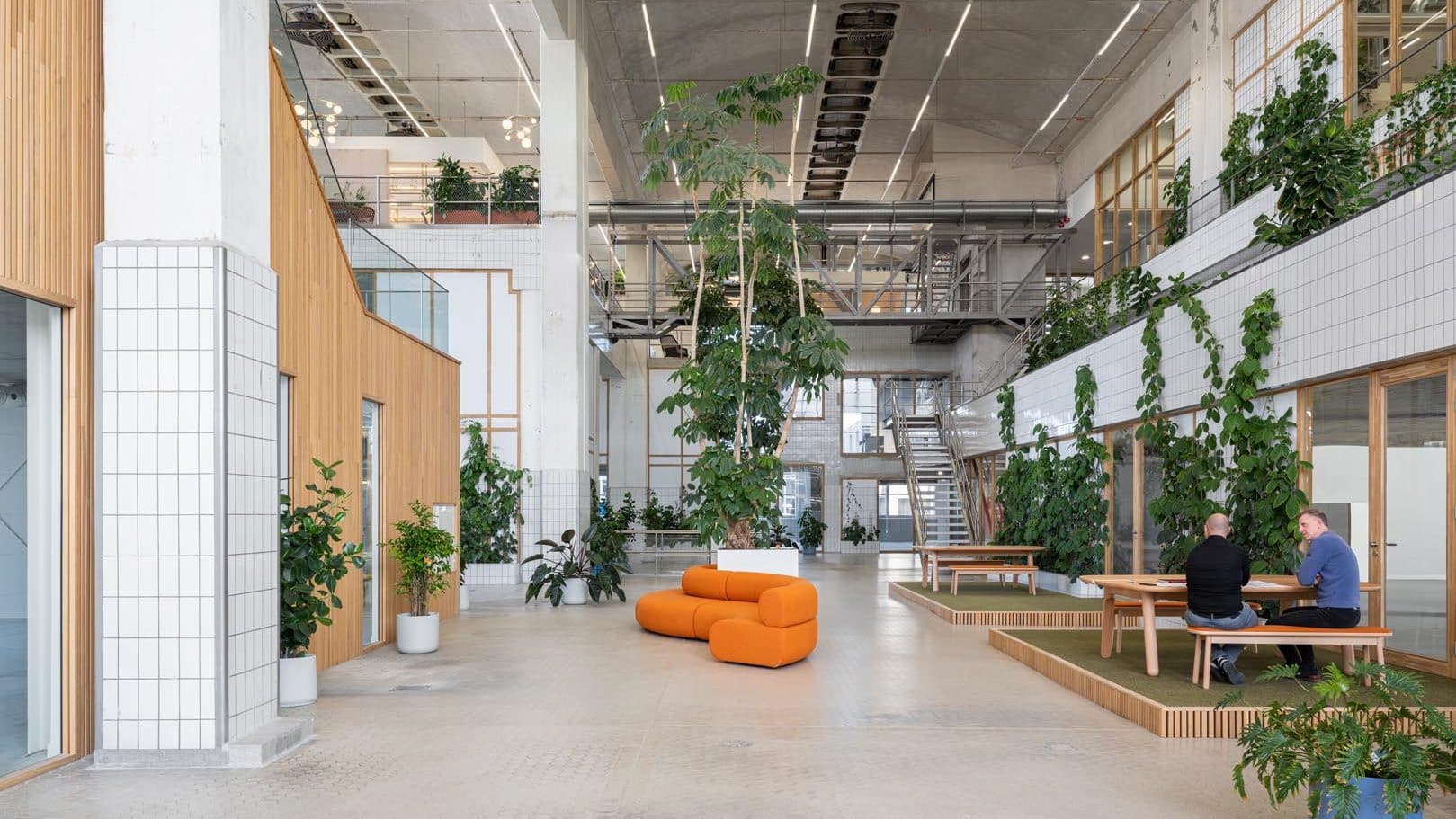
Do you know that feeling when you take a walk in the woods and your head suddenly feels clear? As if you exhale stress and inhale tranquility in a single breath?
Well, that is precisely what biophilic design can achieve. But in the office. And without the mud on your shoes.
What is biophilic design?
Biophilic design is based on the principle that humans naturally possess a strong bond with nature, a concept known as biophilia (literally: love of life). The idea is that when we integrate elements of nature into our buildings, we function better. We feel healthier, less stressed, and more connected.
Not with bird sounds on Spotify, but with real natural elements in your workspace. Think of daylight, plants, natural materials, soft shapes, and even a fountain. After all, we are not robots, even if we sometimes live as if we only need Excel and coffee to function. We are biological beings who thrive in natural environments.
Science with roots
33% choose their employer based partly on the office interior
15% increase in well-being
among employees
15% increase
in creativity
6% more
productivity
Plants
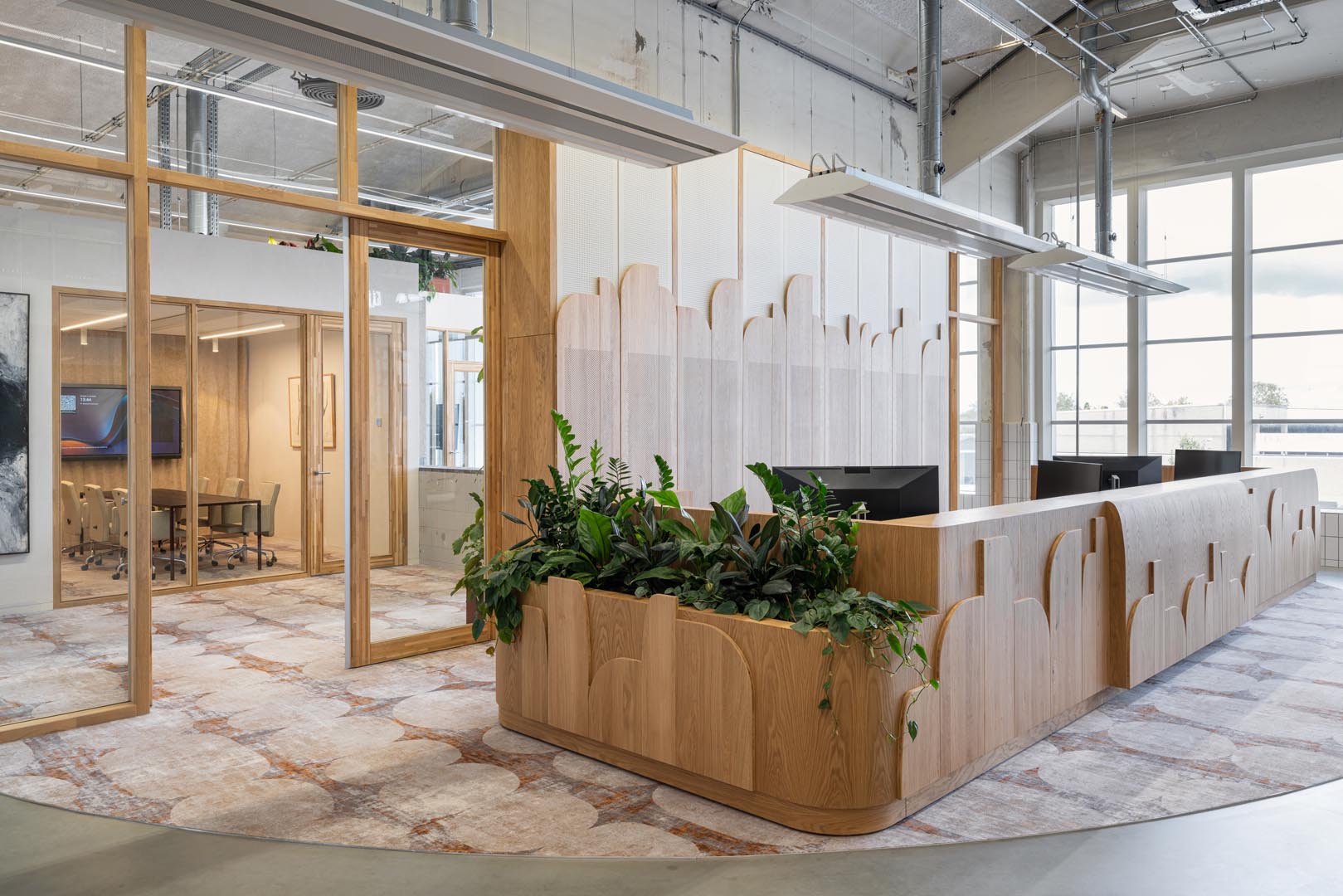
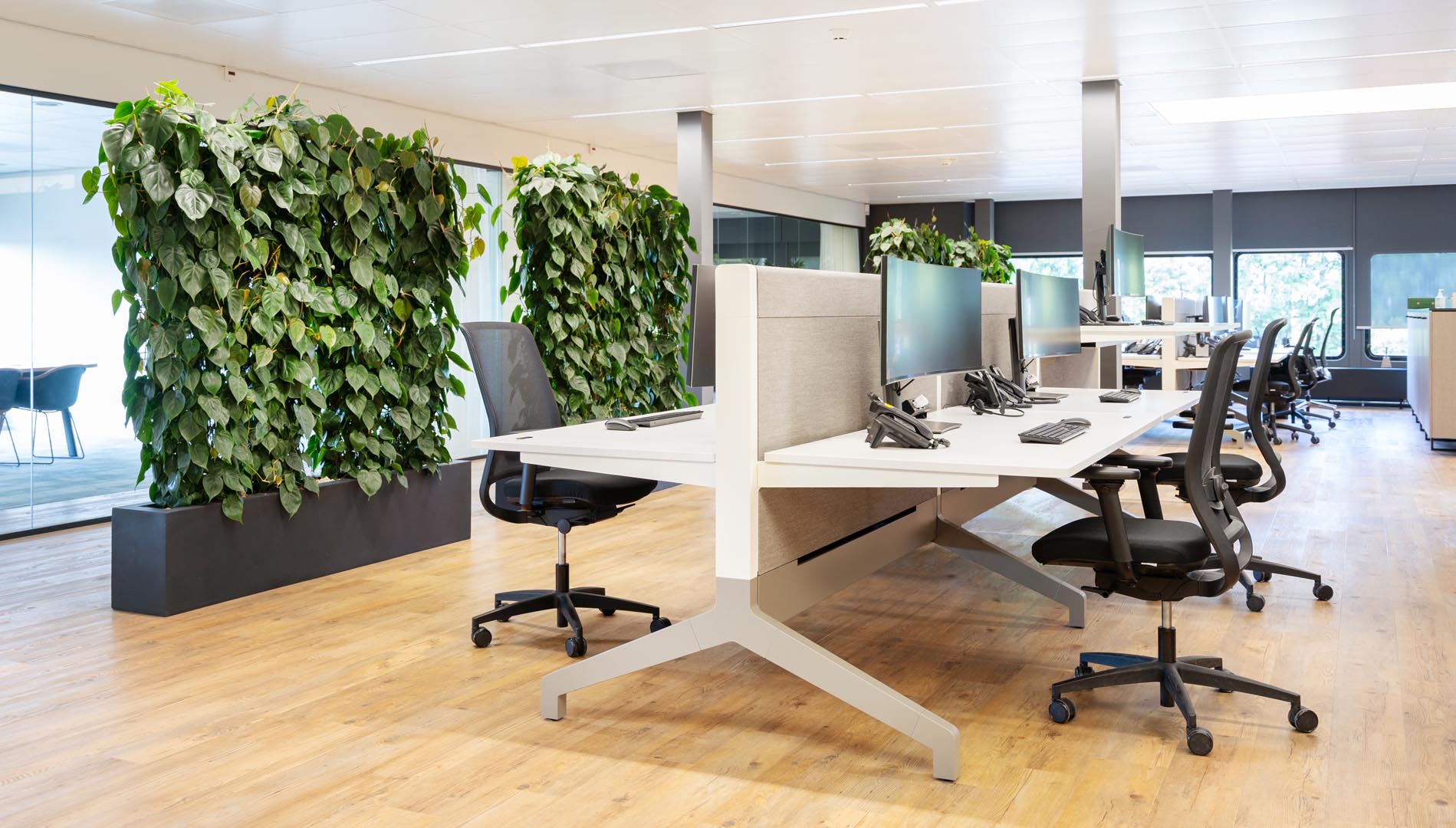
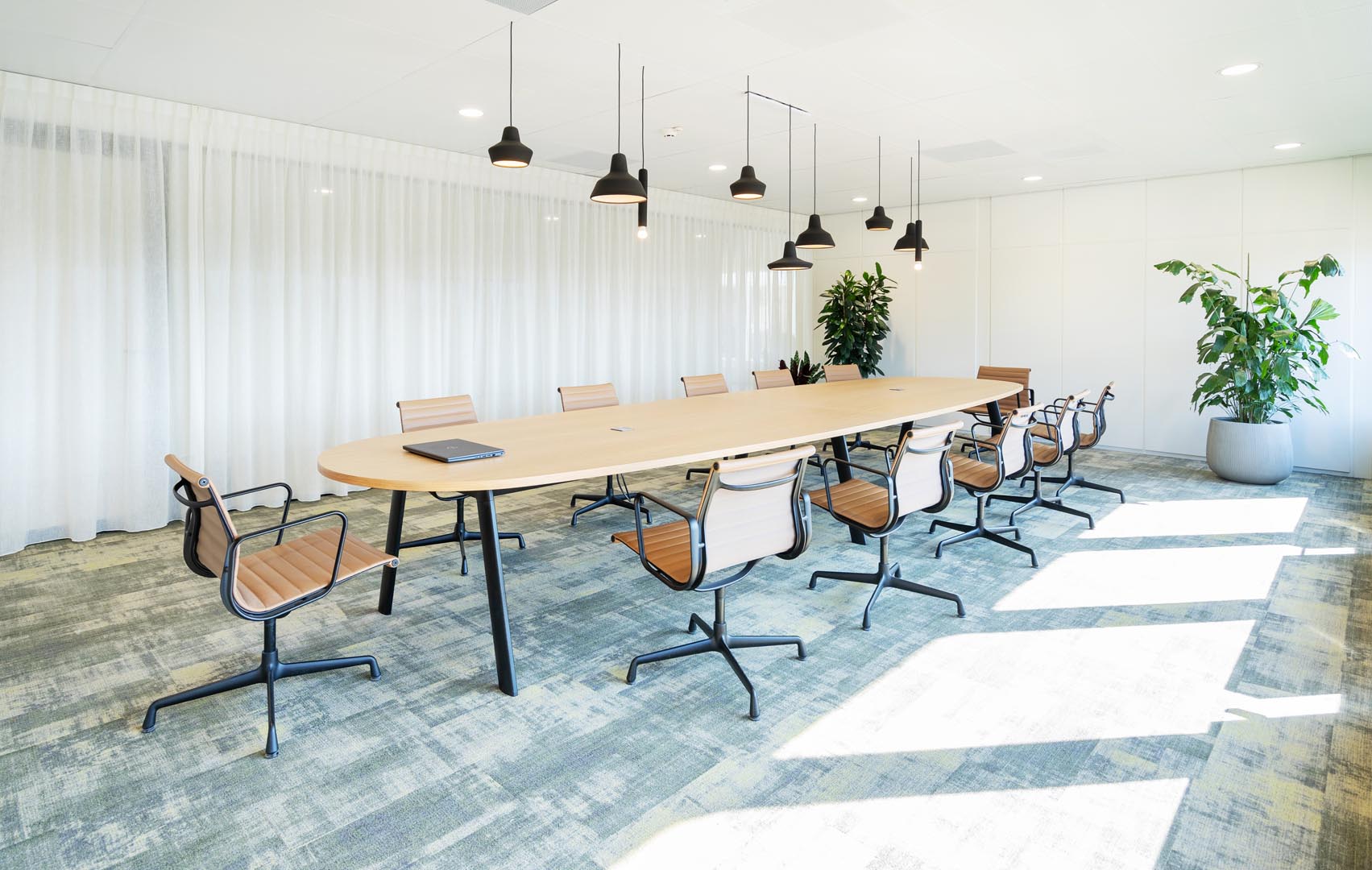
Plants purify the air, reduce stress, and increase concentration. Fresh flowers in meeting rooms also work wonders.
Light
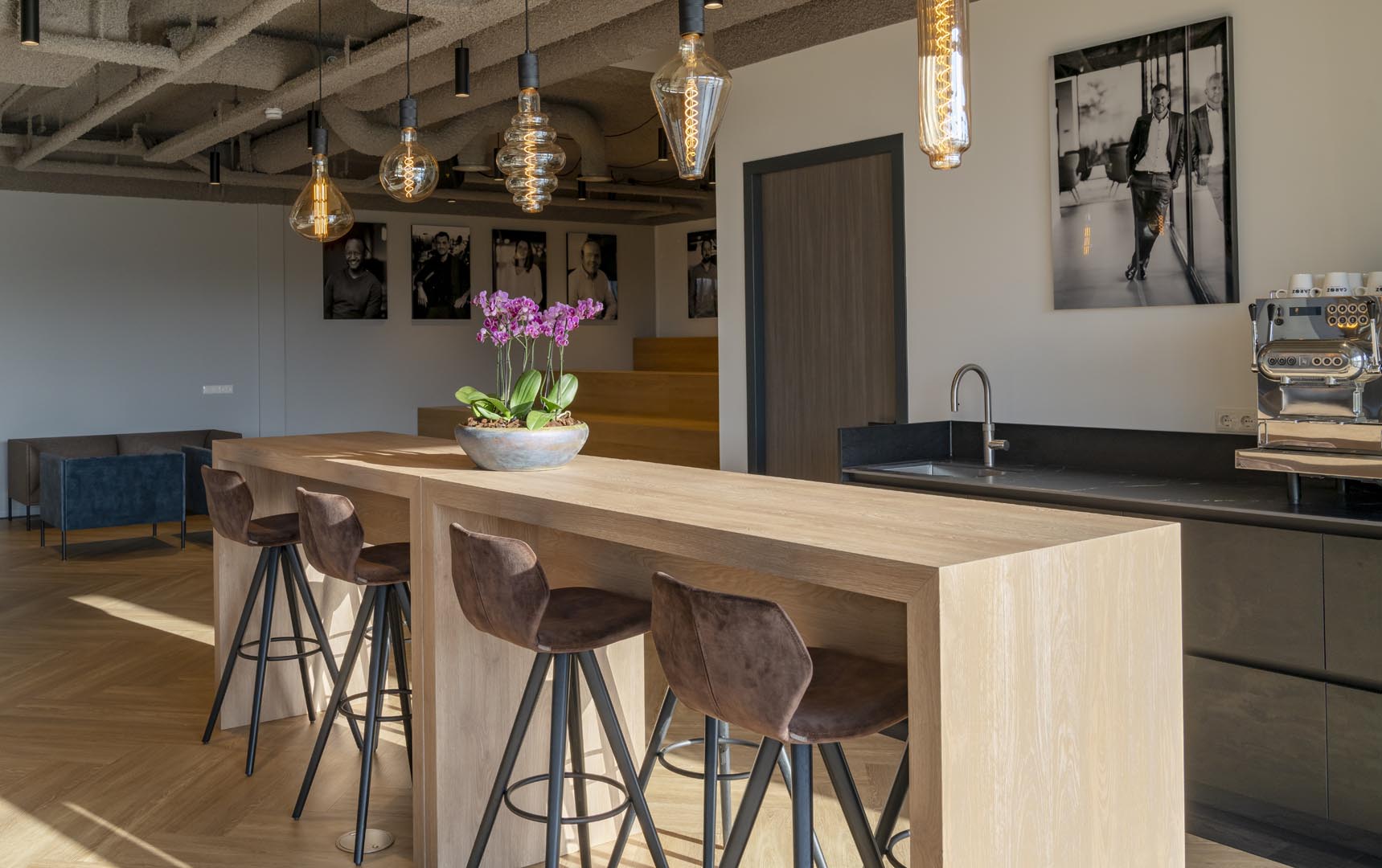
A workplace with access to natural light ensures a better circadian rhythm and less fatigue.
Water
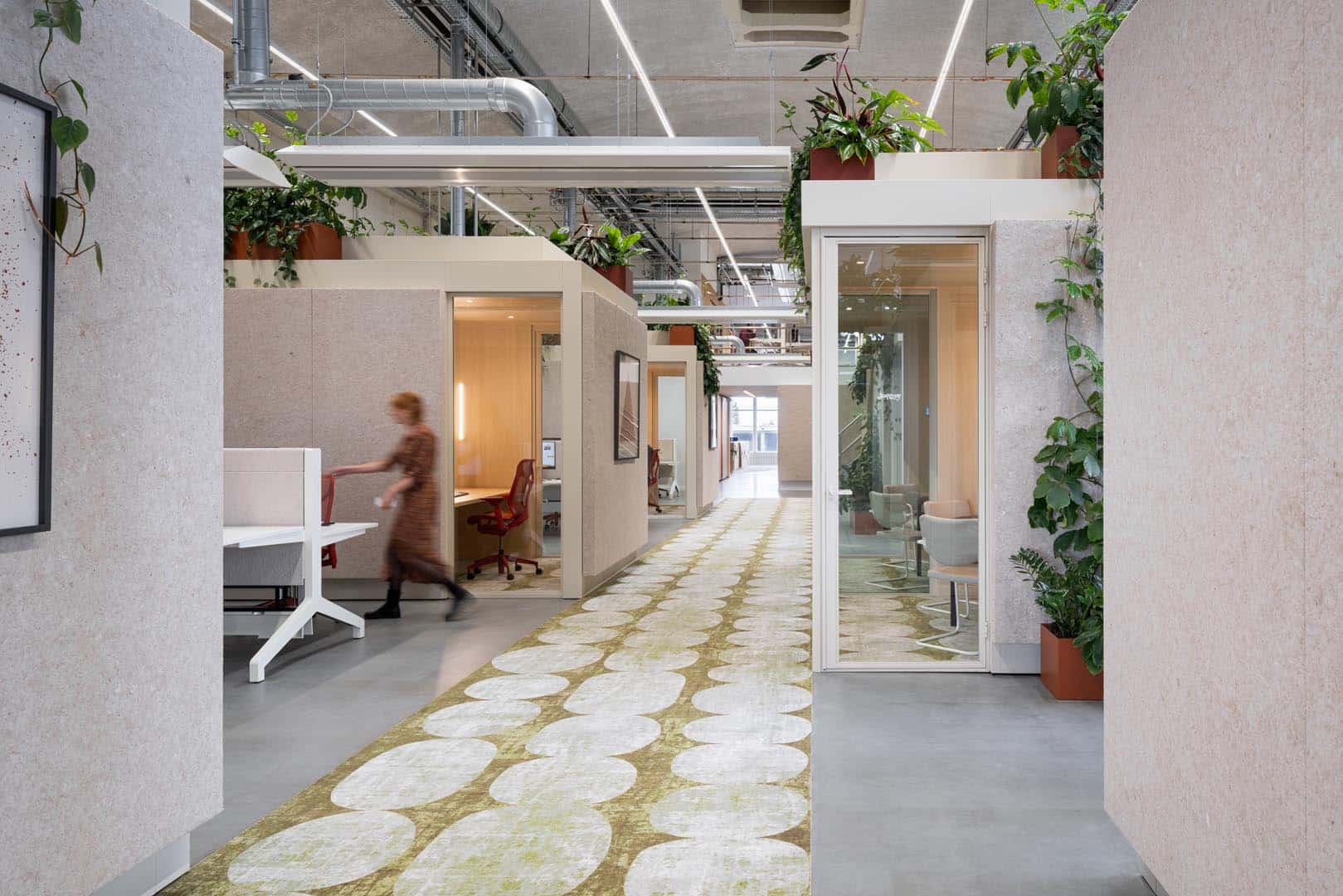
Aquariums or small fountains bring tranquility and a gentle form of focus.
Air
Fresh air and natural ventilation are essential for cognitive performance.
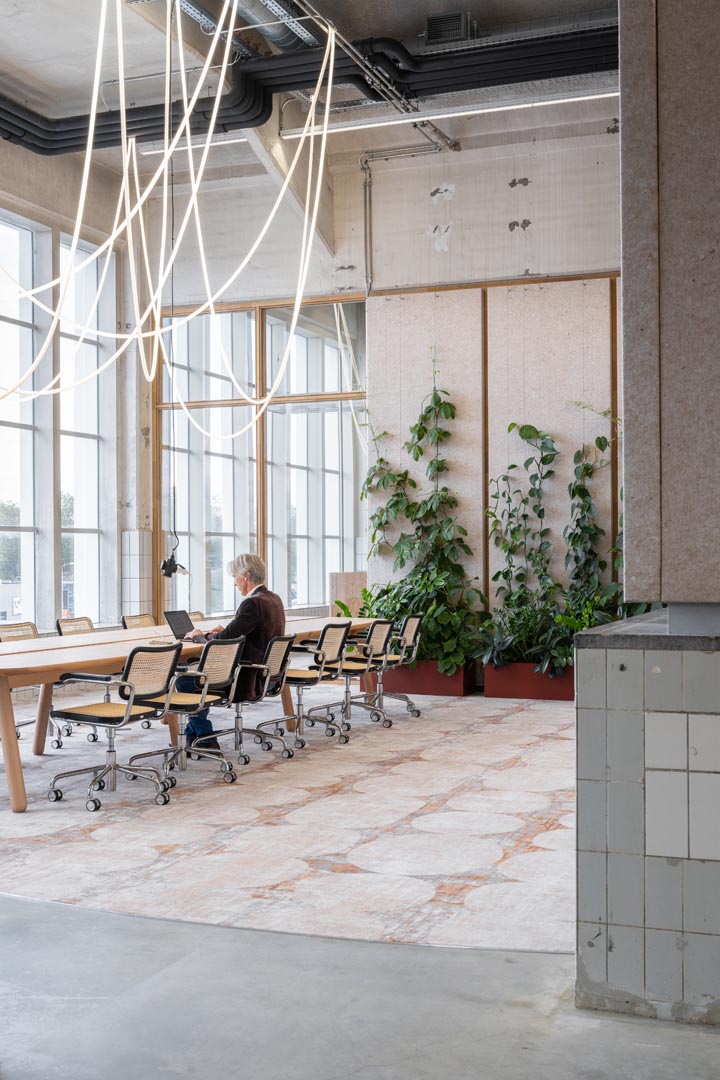
Lighting
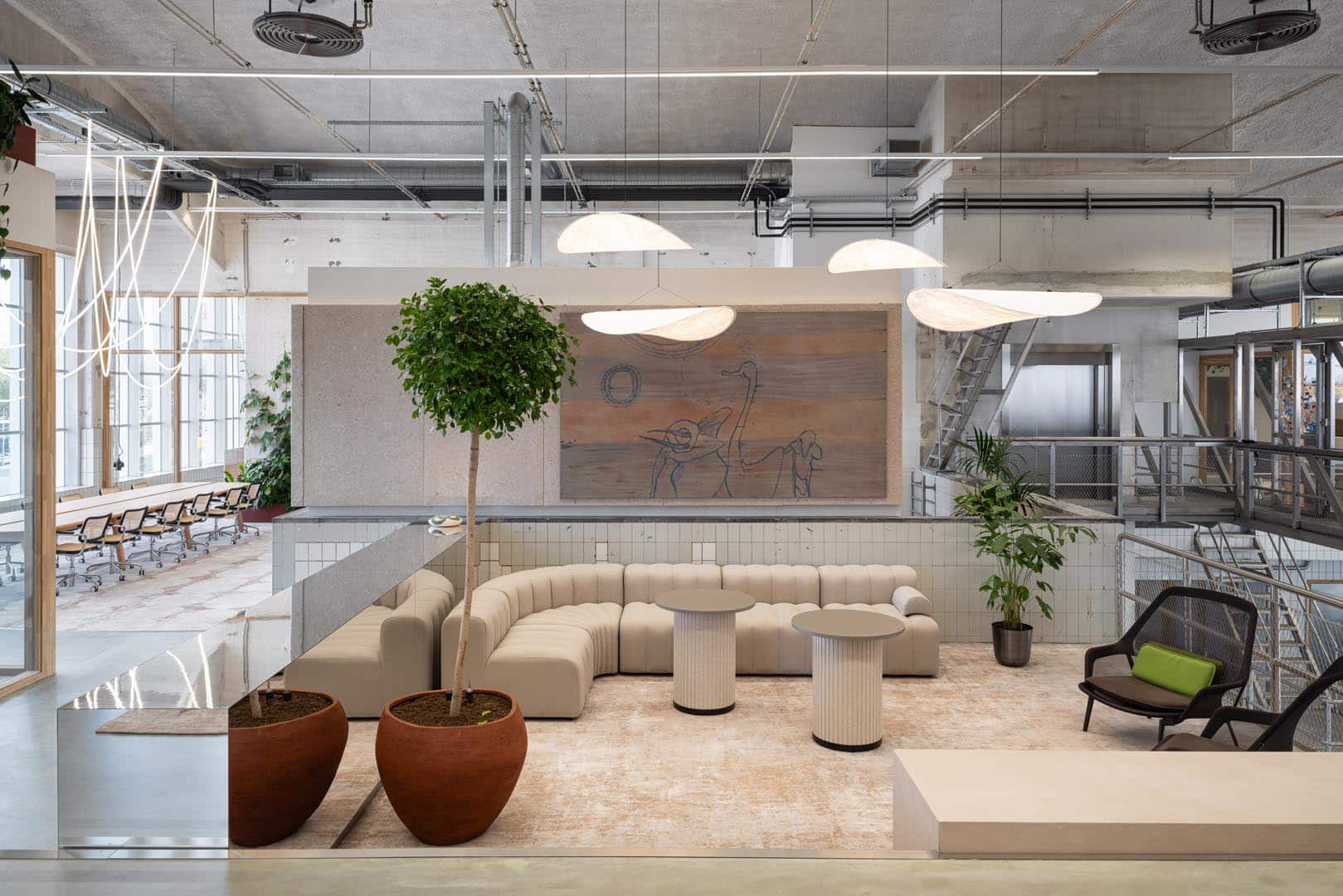
Moving light or lighting that mimics daylight throughout the day.
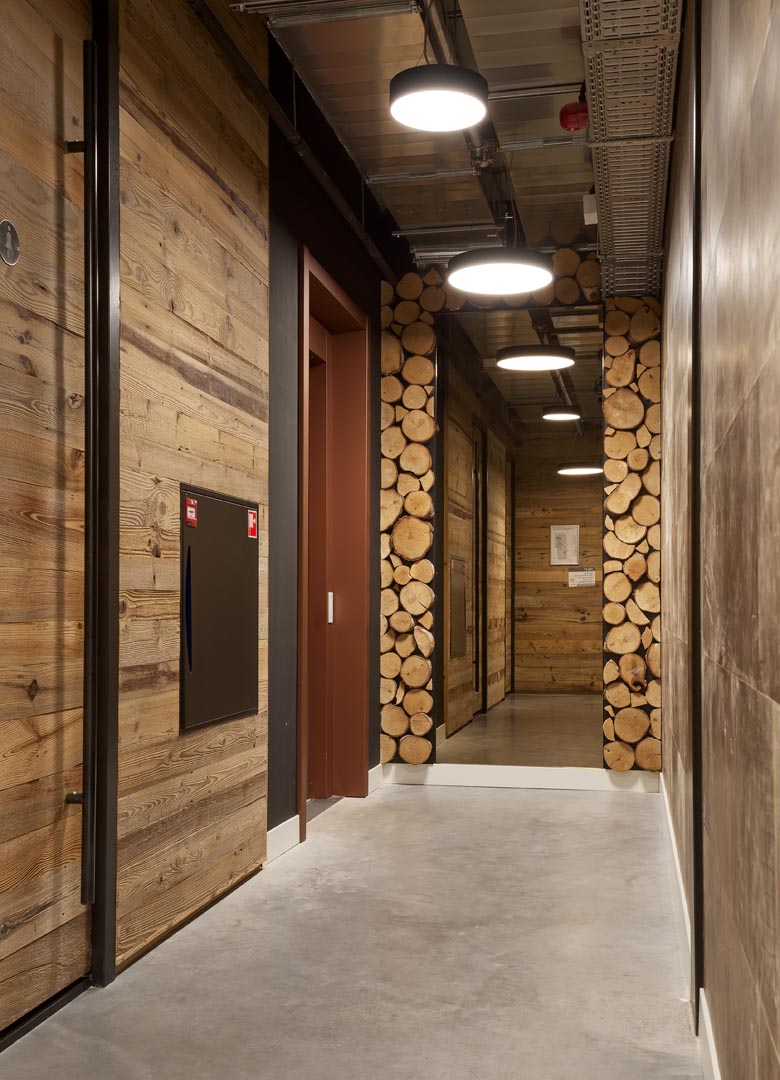
Patterns
Patterns and textures inspired by leaves, water, sand, or tree bark provide visual tranquility and mental stimulation.
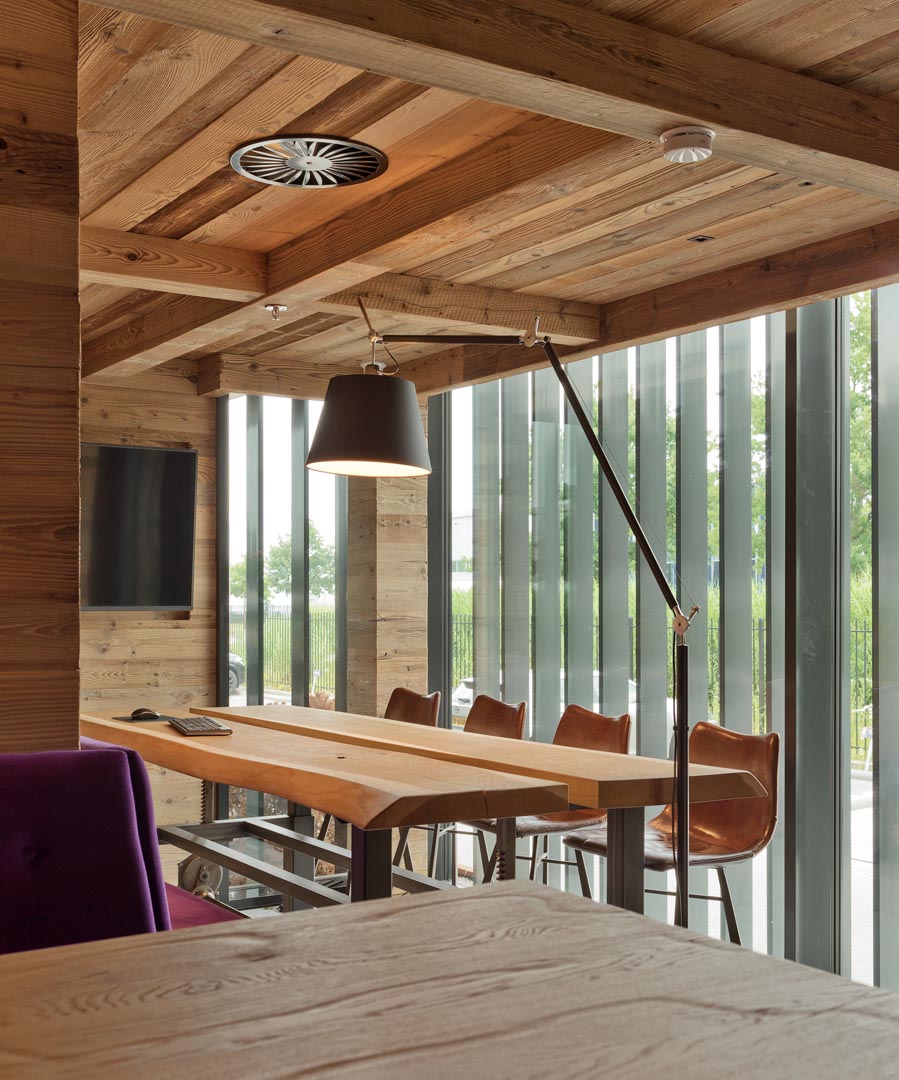
Colors
Colors influence our mood more than we think. Earth tones, shades of green, and soft blues bring peace, focus, and a sense of connection with nature.
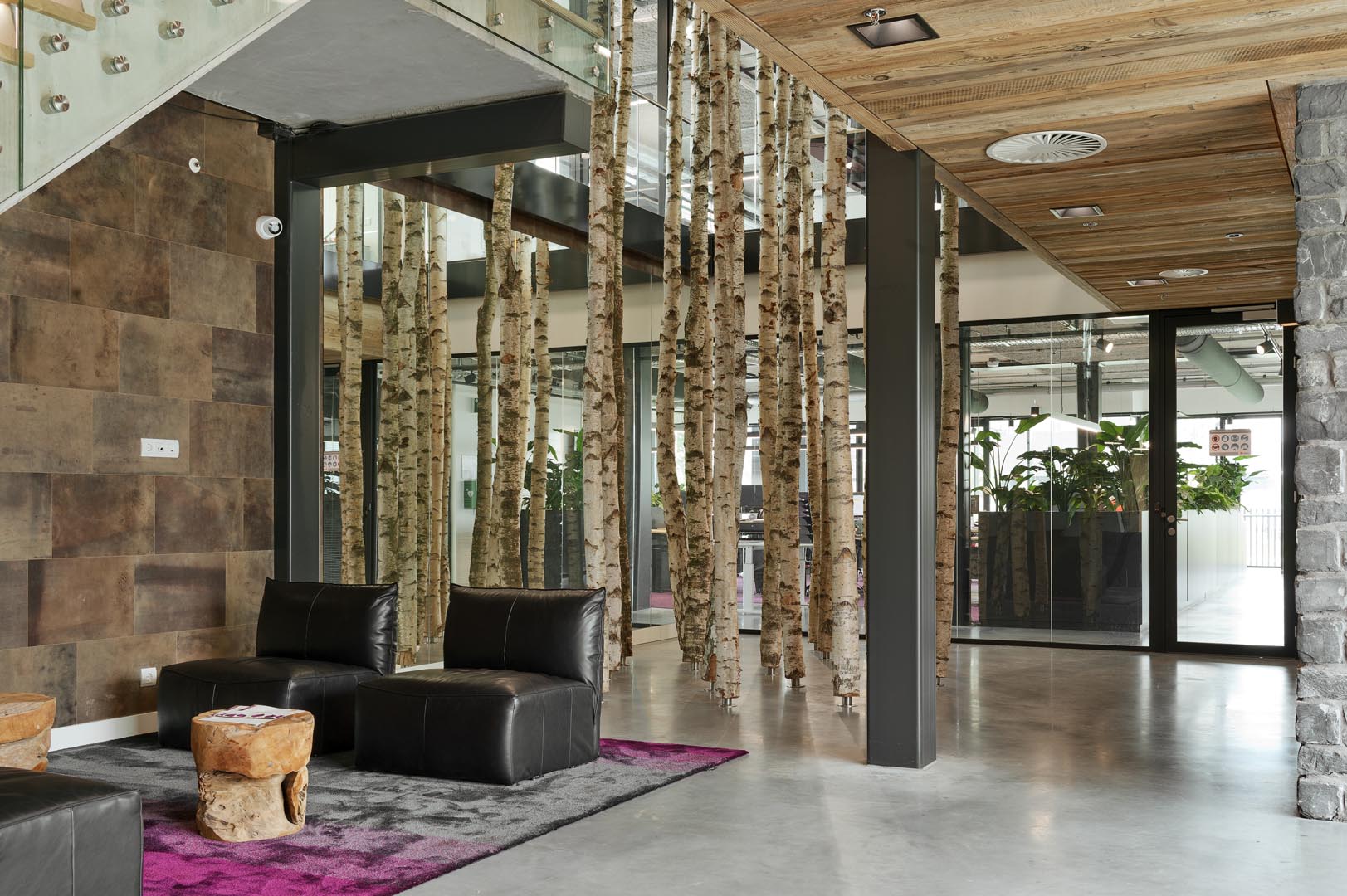
Materials
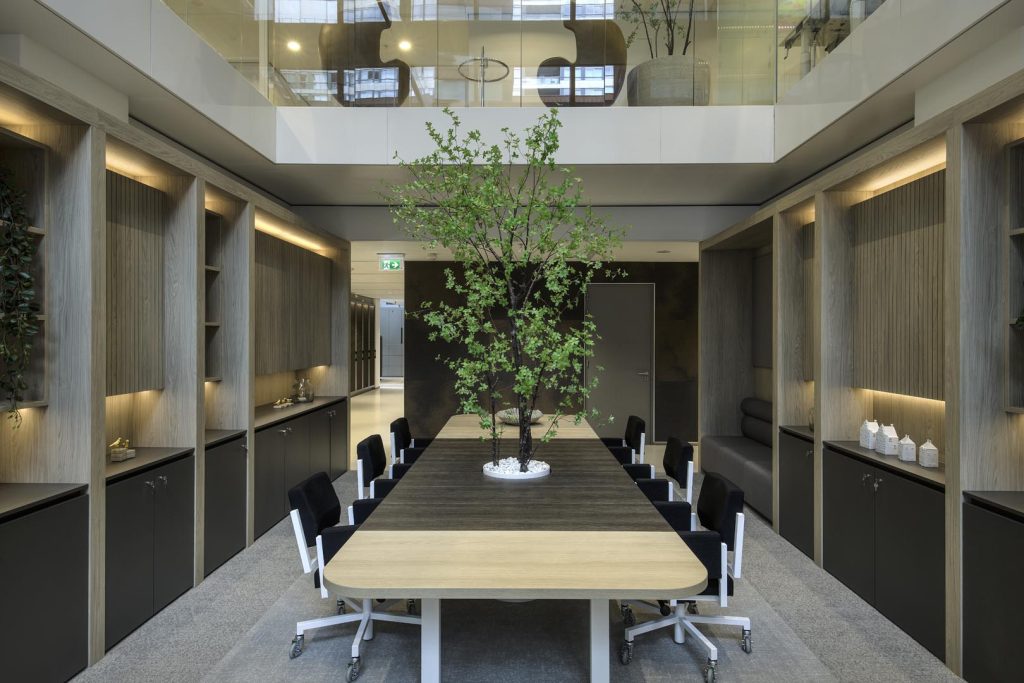
Wood, stone, wool, or bamboo: natural materials give a space character and ensure a warm, authentic atmosphere.
Spatial experience and sensory variety
We feel best in spaces where we have both shelter and an overview, just as we did in nature in the past, when we had to take cover while remaining alert.
In a well-thought-out office, you will find a fine balance between quiet zones for focus and open spaces for collaboration, just like in a forest, where you have open clearings and sheltered spots.
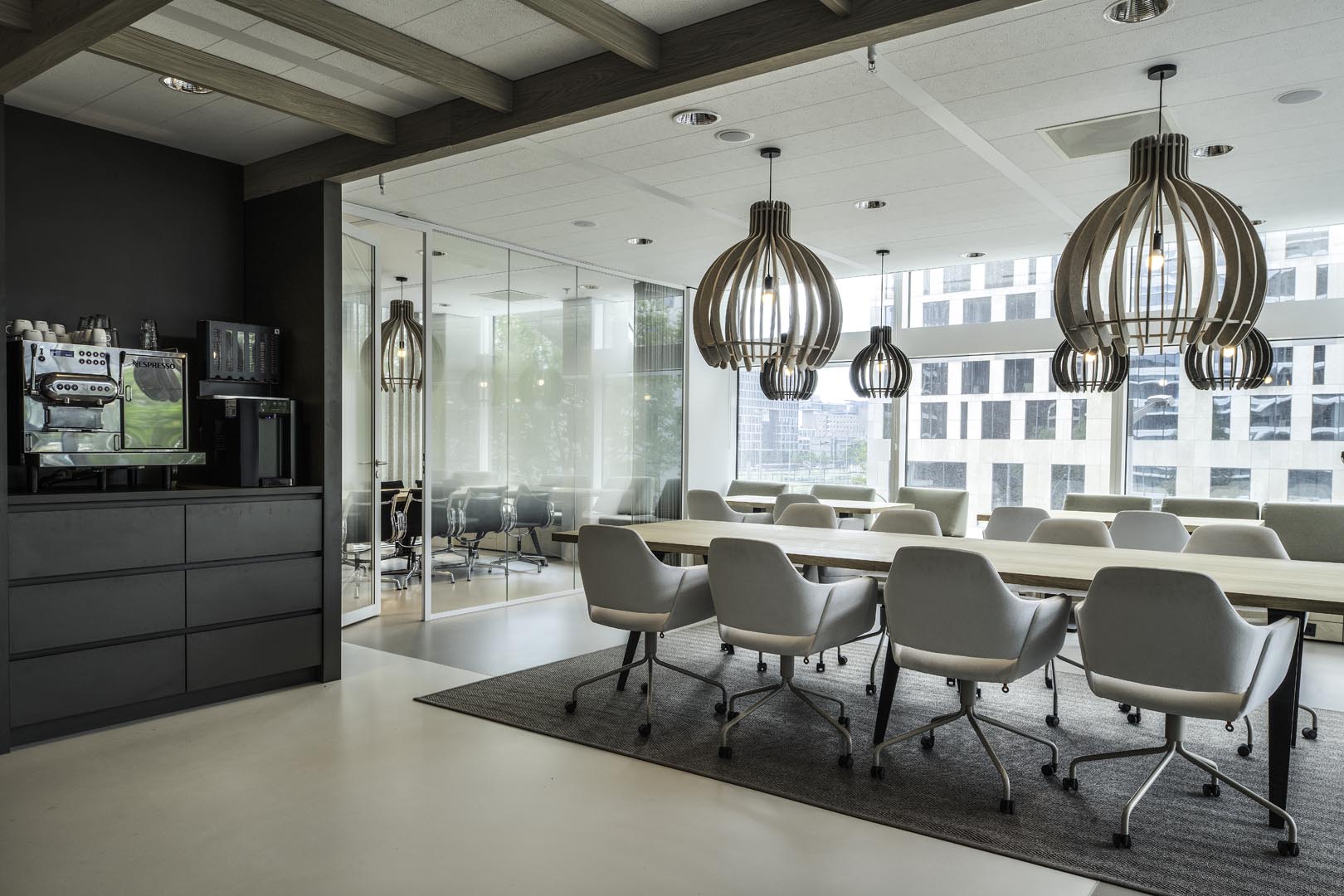
Prospect zones
Places where you can see far (e.g., open spaces or views of the outdoors).
People feel better in an environment where they can see far, whether that is looking outside or across the room. Such prospect zones provide a sense of freedom, safety, and mental breathing space.
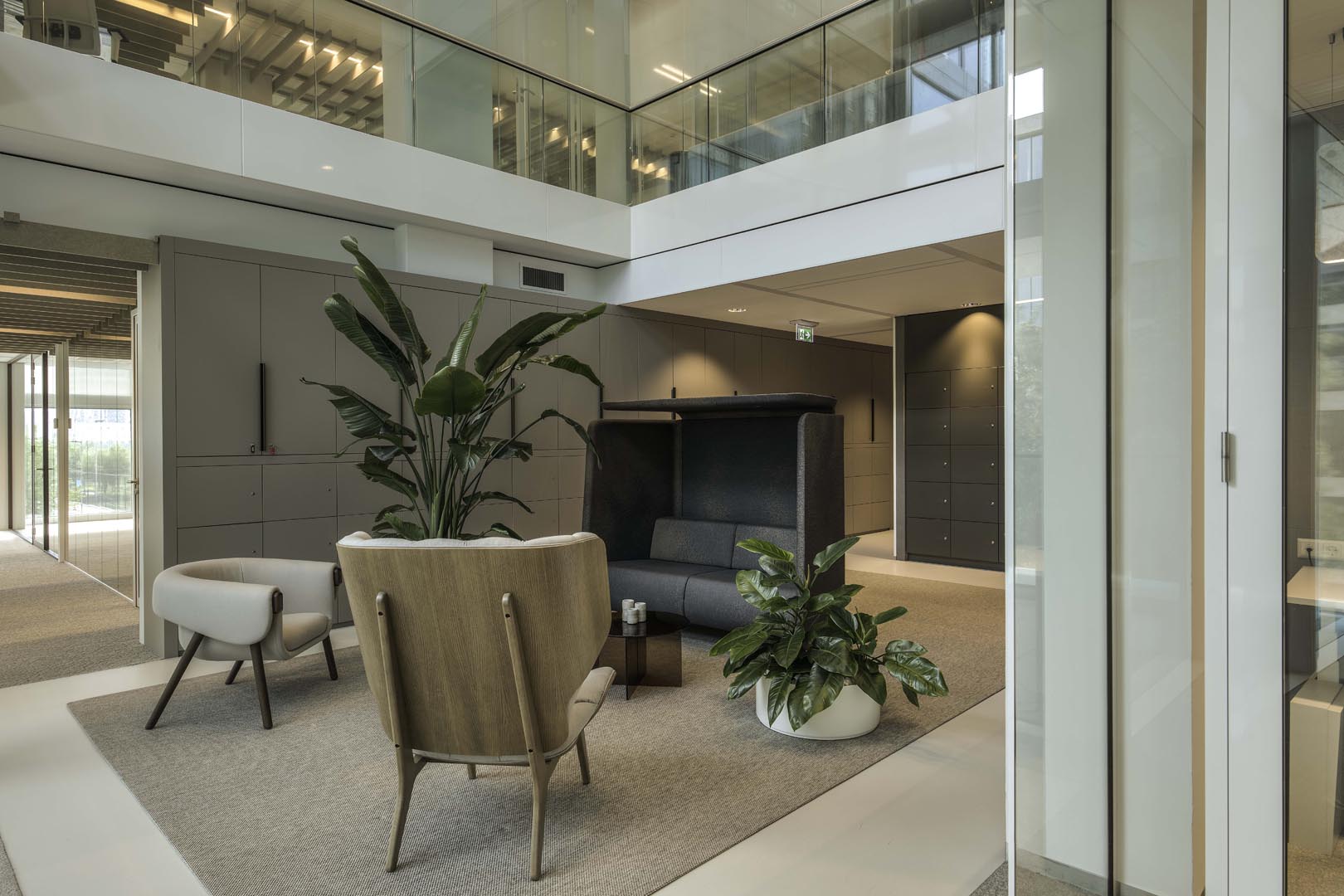
Refuge spaces
In a dynamic office environment, it is important to also leave room for silence. Refuge spaces are cozy, sheltered spots where you can retreat for a moment to find peace.
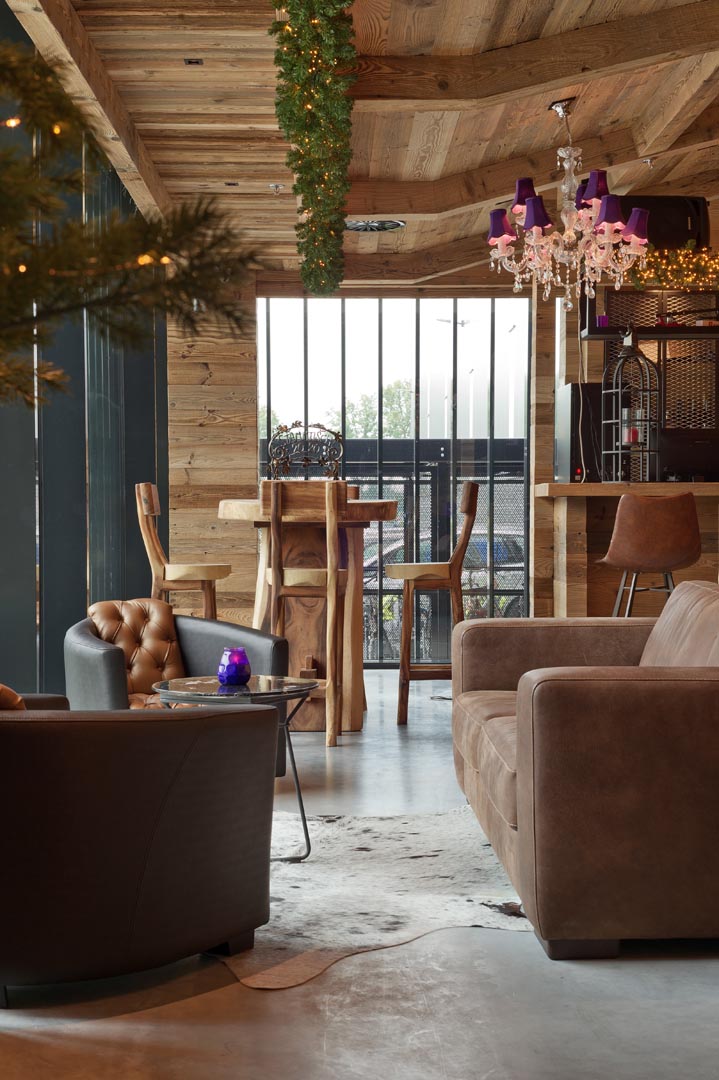
Sensory stimuli
In a biophilic office, it is also about what you hear, smell, and feel. Think of the soothing sound of flowing water, the scent of natural materials such as wood or lavender, and a tactile mix of materials such as wool, glass, felt, or bamboo.
An office where you want to be
Biophilic design is not a luxury, but an essential ingredient of modern office design. In a world that is becoming increasingly fast and digital, we desperately need that natural counterpart. And that is exactly where we excel: creating smart workplaces where you feel good – both physically and mentally.
Ready for a smarter office?
Do you have a question or would you like to schedule a meeting? Please leave your details below and we will contact you as soon as possible.


Stay informed
- Trends, expertise, news, and tips.
- Make your workplace more productive, where every employee enjoys coming to work.
- Topics: corporate wellbeing, office furniture, and sustainability in the office.