
Hybrid working: 4 must-haves for every office space.
Category
Share on:
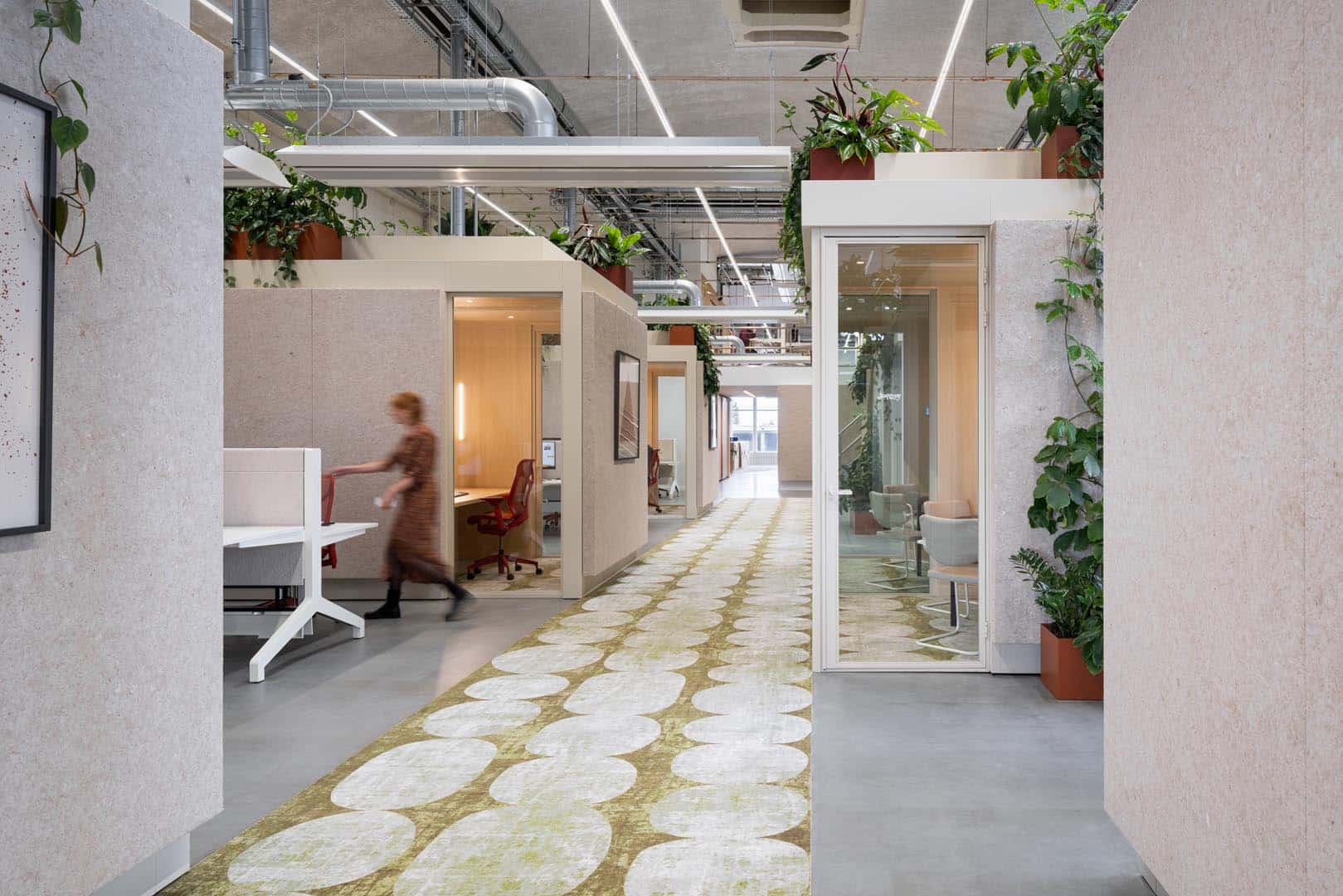
While until recently the term ‘hybrid’ was mainly linked to cars, it is now also a concept in HR under the term Hybrid Working. Because the combination of home or teleworking and working at the office is, for many, The New Way of Working. Post-pandemic, the office landscape will therefore take on a different form.
Hybrid Working also brings challenges. Maintaining the work-life balance, keeping everyone ‘connected’, and sustaining the innovative power within your company… These are our 4 must-haves for an efficient Hybrid Office Space.
1. Technology as the foundation of hybrid working
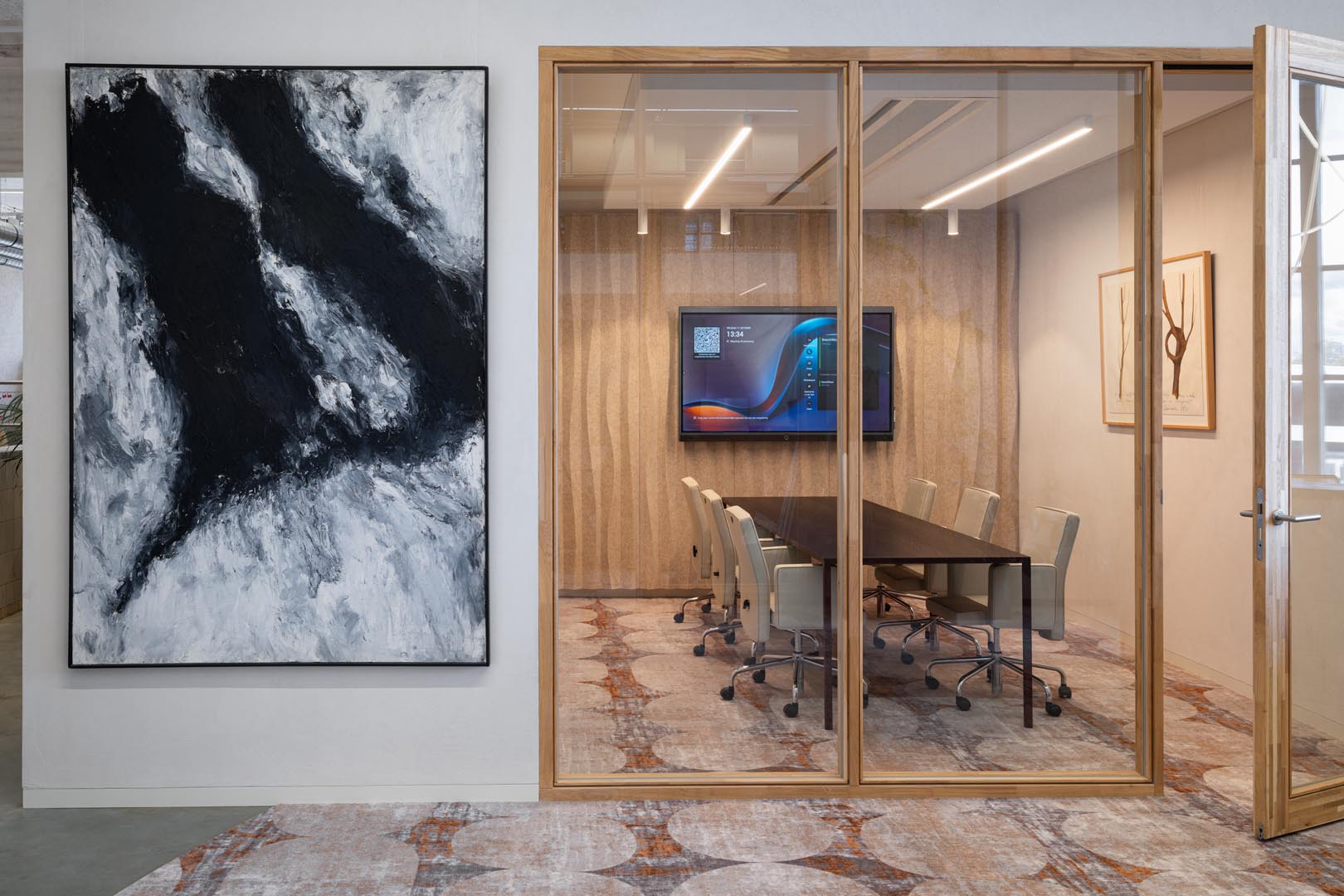
You cannot create a hybrid work environment without technology. Invest in the right tools to support mutual collaboration and grant your employees access to their data and business applications, ‘anyplace, anywhere, anytime’. Consider cameras and microphones with excellent audio and image quality, cloud-based IT infrastructure and cybersecurity, and subscriptions to online communication tools.
2. Fewer desks than people
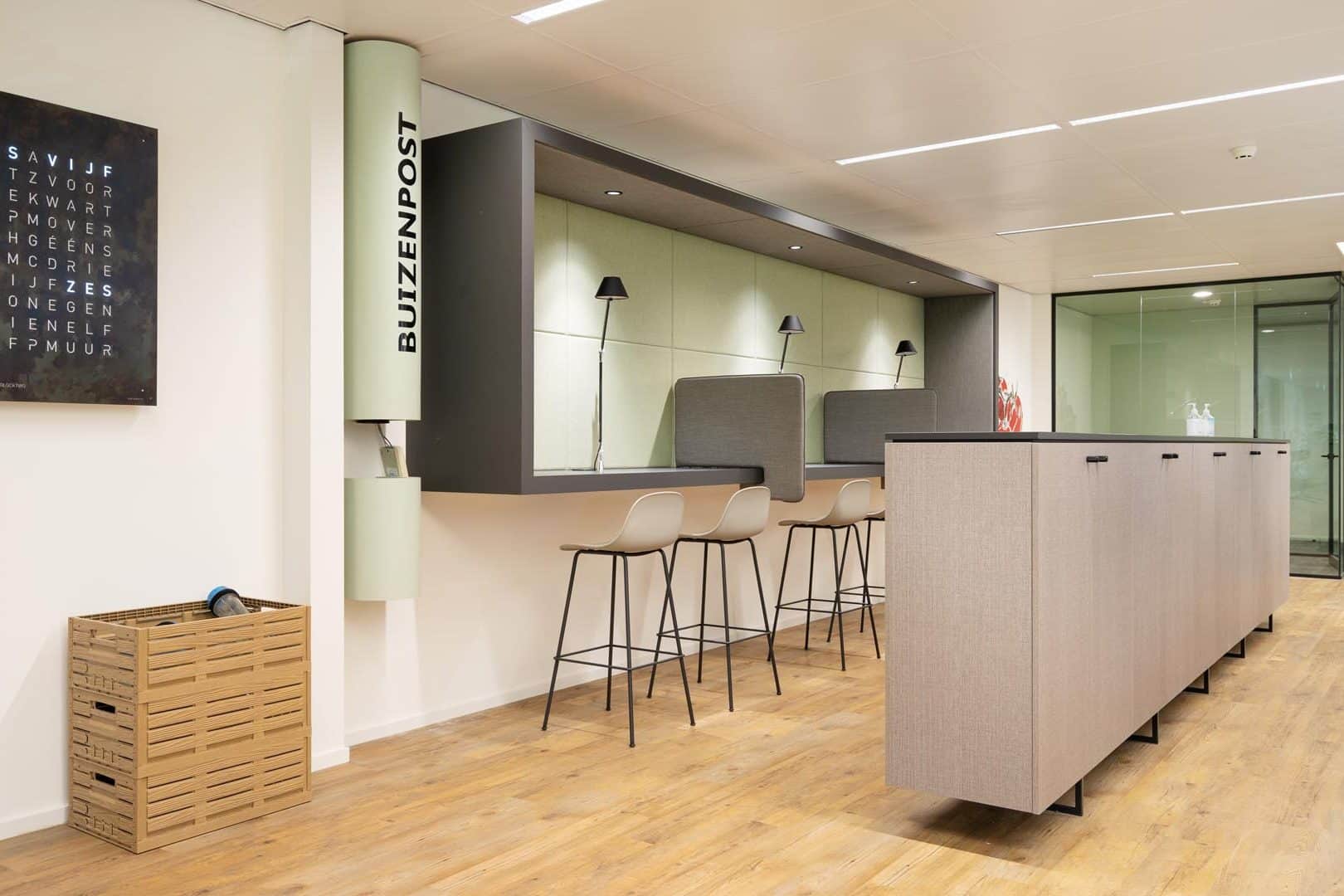
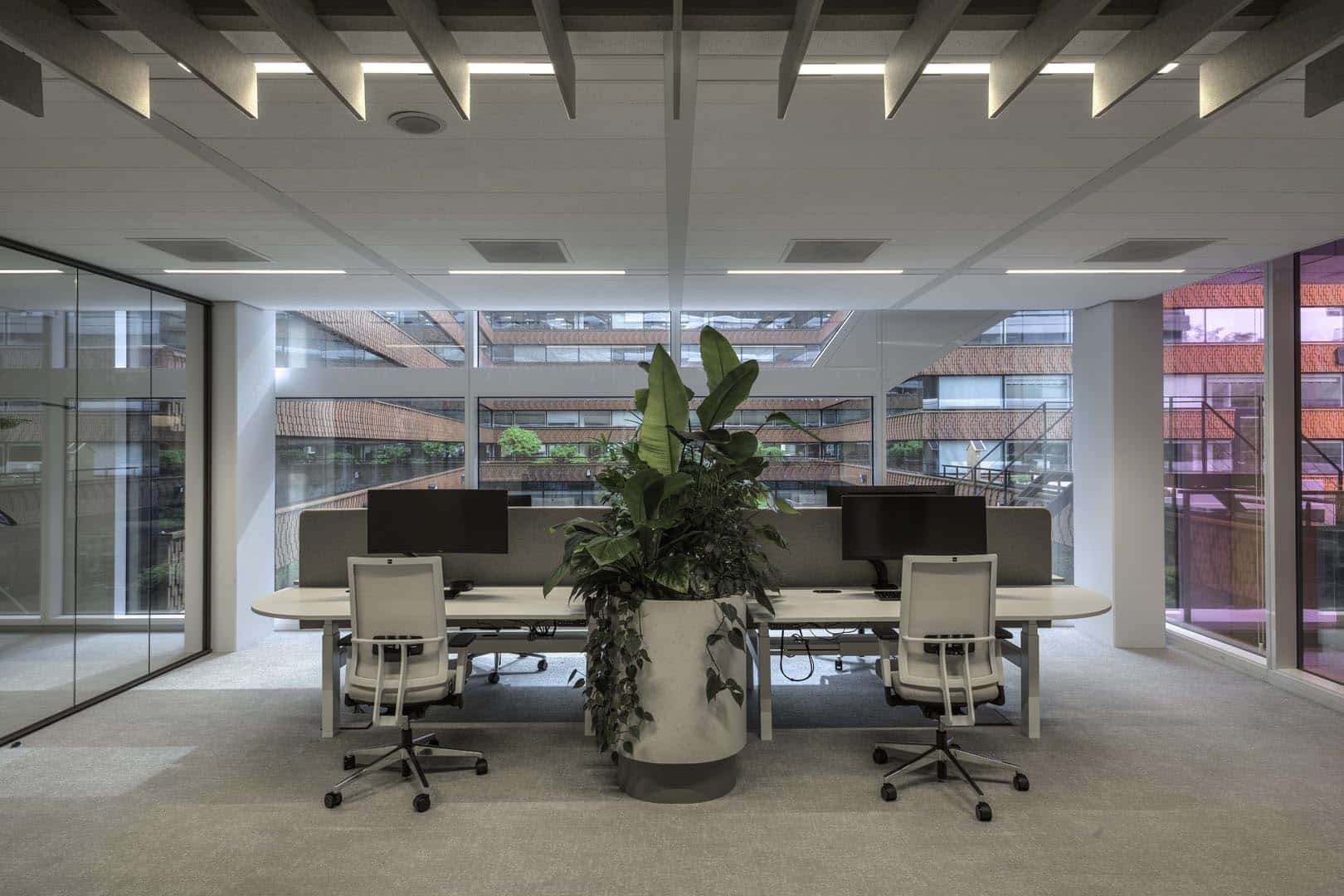
The time when your employees are all present at the office at the same time every day is likely gone for good. Why then would you clutter your office space with unused tables and chairs? We advise companies to implement ‘hot-desking‘. This involves replacing the fixed workstation with a flexible workstation.
The office space you save can be replaced by a relaxation area or a multipurpose room. Think broader than the open-plan offices of the past. Curious about how we shape this in practice? Feel free to visit our concept place.
3. Activity-based design
The hybrid work environment takes much more account of the activities in the 4C model: concentration, communication, contemplation, collaboration. It is important to let your employees help determine where they can perform at their best. The function and design of various office spaces must be much more well-thought-out now that the home office has become commonplace.
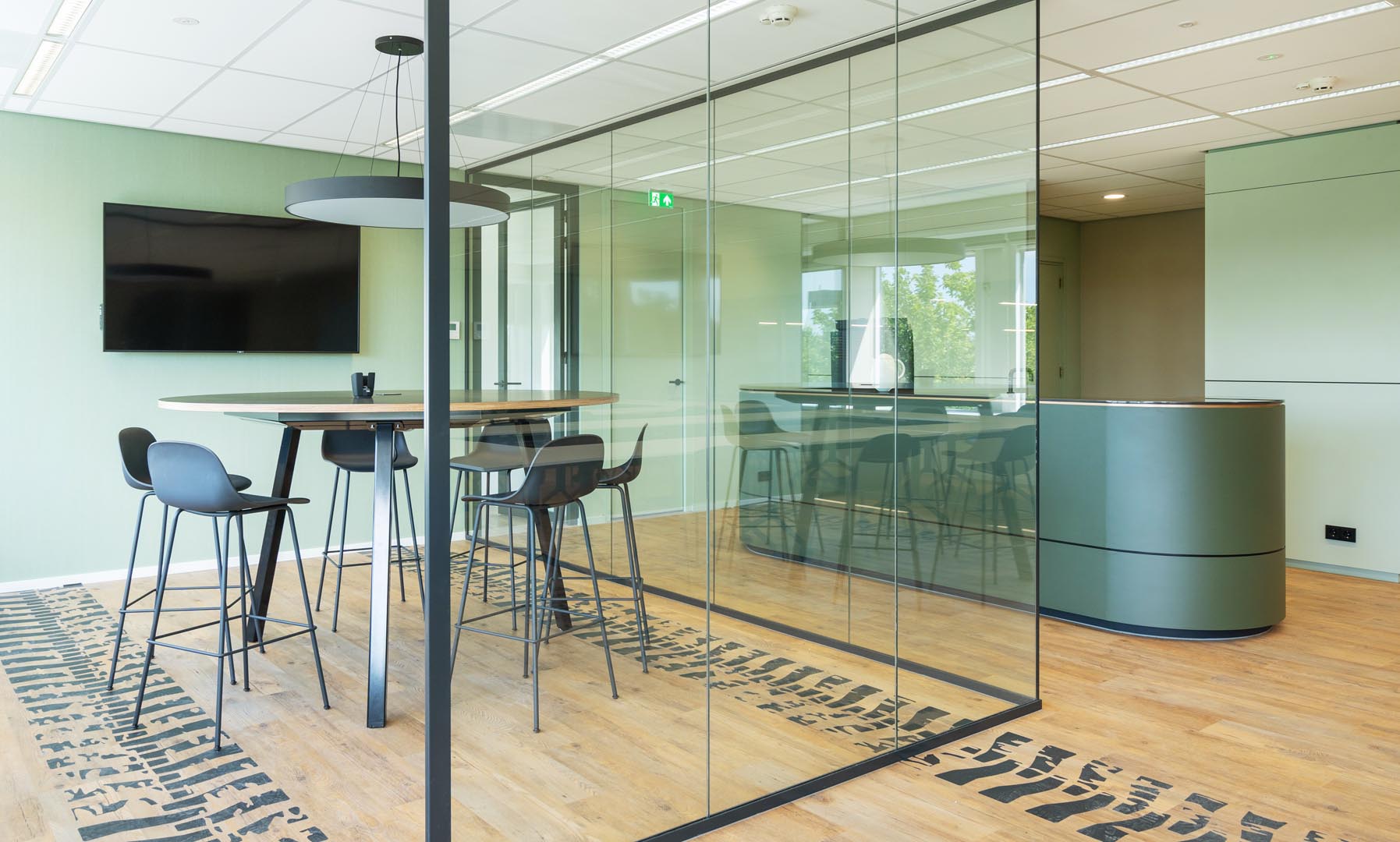
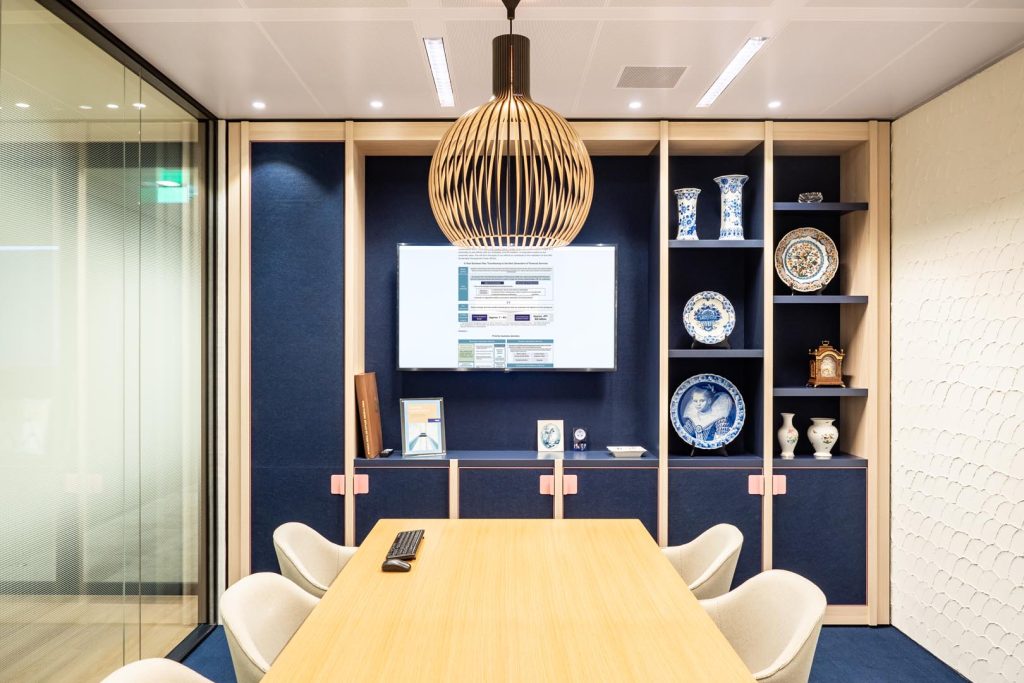
The workplace is evolving into an inspiring meeting place according to the needs of the company. For example, a creative agency needs a brainstorming room, while a bank or insurance office benefits more from smaller, enclosed meeting spaces to discuss sensitive topics. Handy tip: list the types of activities within your company and then align your office design accordingly.
4. Modular spaces
Now that we are moving away from purely physical presence at the office, modular, multifunctional spaces are the way to go. Especially considering activities that can now take place in different settings. No two meetings are the same.
One happens face-to-face and requires a relaxed setting with comfortable seating, while another requires a hybrid layout. You can read about how to properly design your meeting room here. A small hint: there is no one-size-fits-all solution. Your ideal hybrid work environment is completely tailored to your organization.
Stay informed
- Trends, expertise, news, and tips.
- Make your workplace more productive, where every employee enjoys coming to work.
- Topics: corporate wellbeing, office furniture, and sustainability in the office.