
How do you improve office acoustics without major renovations?
Category
Share on:
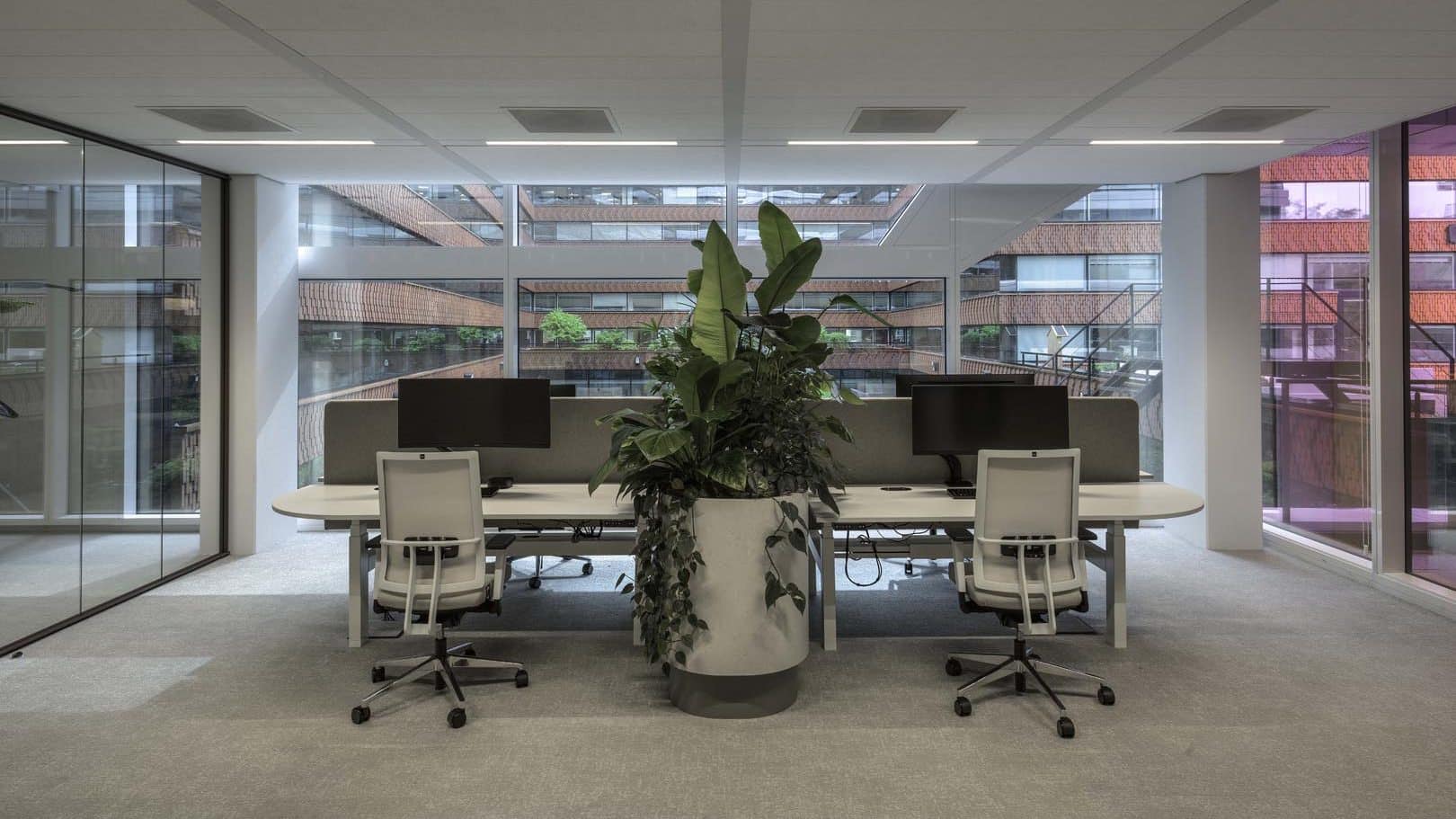
5 tips for better office acoustics
Reverberation. Background noise. Colleagues speaking just a little louder than necessary. Sound familiar?
That is no coincidence. In open office spaces with plenty of glass, concrete, and hard floors, sound quickly gains free rein. And you notice it in the small signals: people put on their headphones more often. Meetings feel more exhausting. Concentrating requires just a bit more energy than it should.
The good news? You don’t have to break down walls to solve this. With a few targeted interventions, you can make your office acoustically much calmer.
Where does this acoustic unrest come from?
Glass, concrete, and hard floors constantly reflect sound. Speech lingers, reverberation time increases, and conversations begin to bleed into one another. What starts as a single conversation quickly becomes background noise.
Where exactly is the problem?
- glass walls
- concrete ceilings
- poured floors or other hard flooring
- large open spaces without shielding
Sleekly designed? Certainly. Acoustically considered? Not always. The result? Less speech privacy, more noise nuisance, and noise-related stress. And you feel that in the concentration, productivity, and general well-being of your employees.
What does science whisper to us?
66
%
Drop in productivity due to poor acoustics
23
MIN
Needed after an interruption to regain focus
53
%
Of employees are dissatisfied with noise levels
5 practical tips to improve acoustics in your workplace
1. Add targeted sound absorption to walls and ceilings
Do you want quick results? Then the greatest gain lies in extra absorption.
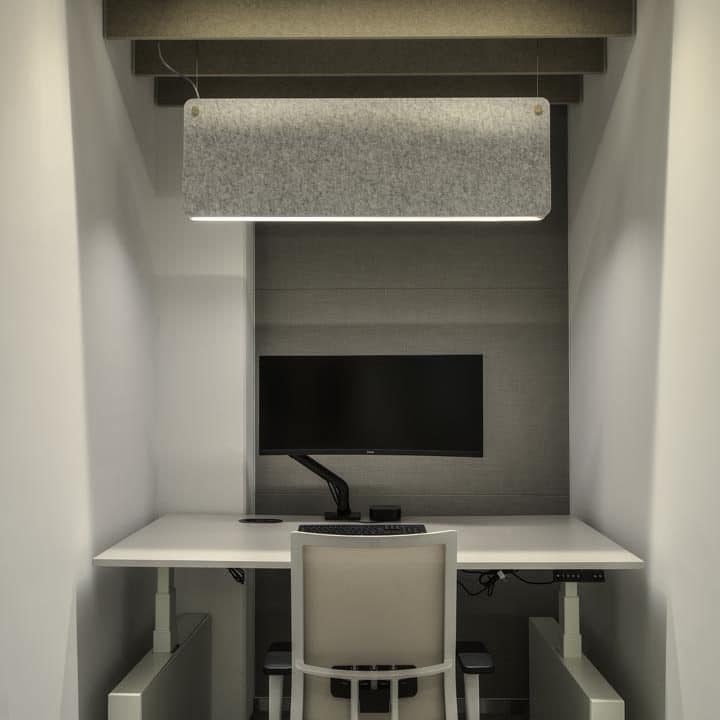
Acoustic wall panels and ceiling panels absorb speech noise instead of sending it back into the room. Especially in zones where there is a lot of talking, such as meeting rooms or consultation areas, they make a world of difference.
Ceiling islands are ideal in an open office space: you hang them without structural work, yet they break the reverberation throughout the entire room.
2. Consciously choose softer materials
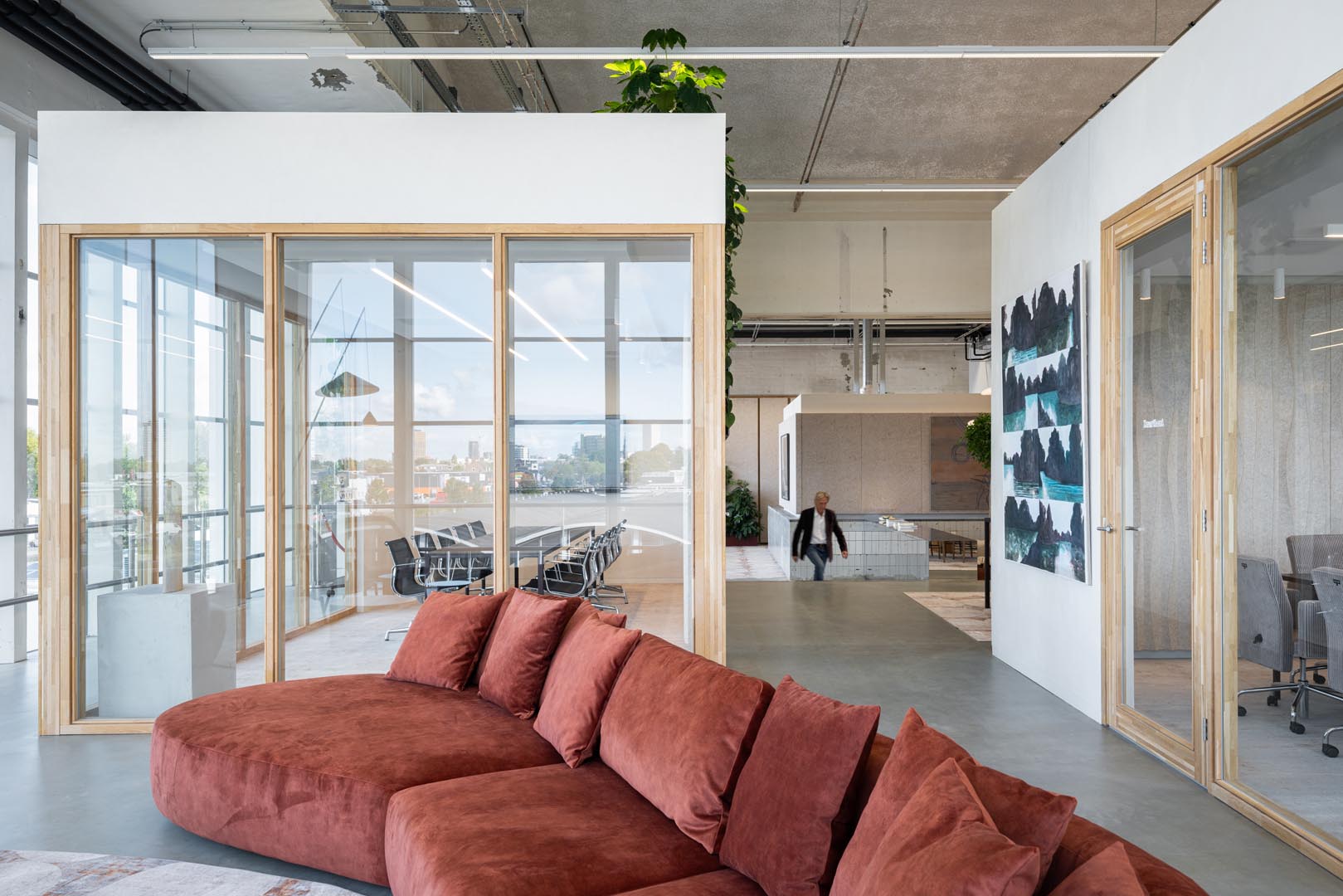
The more hard surfaces, the more sound can reflect. By adding softer materials, you noticeably reduce reverberation time and bring audibly more tranquility to the space.
Consider:
- carpet or rugs on hard floors
- curtains for large glass sections
- upholstered furniture in consultation zones
These are not major renovations, but rather thoughtful choices. They dampen sound and give your office extra warmth and character.
3. Shield workstations thoughtfully
You don’t need to install permanent walls to create peace.
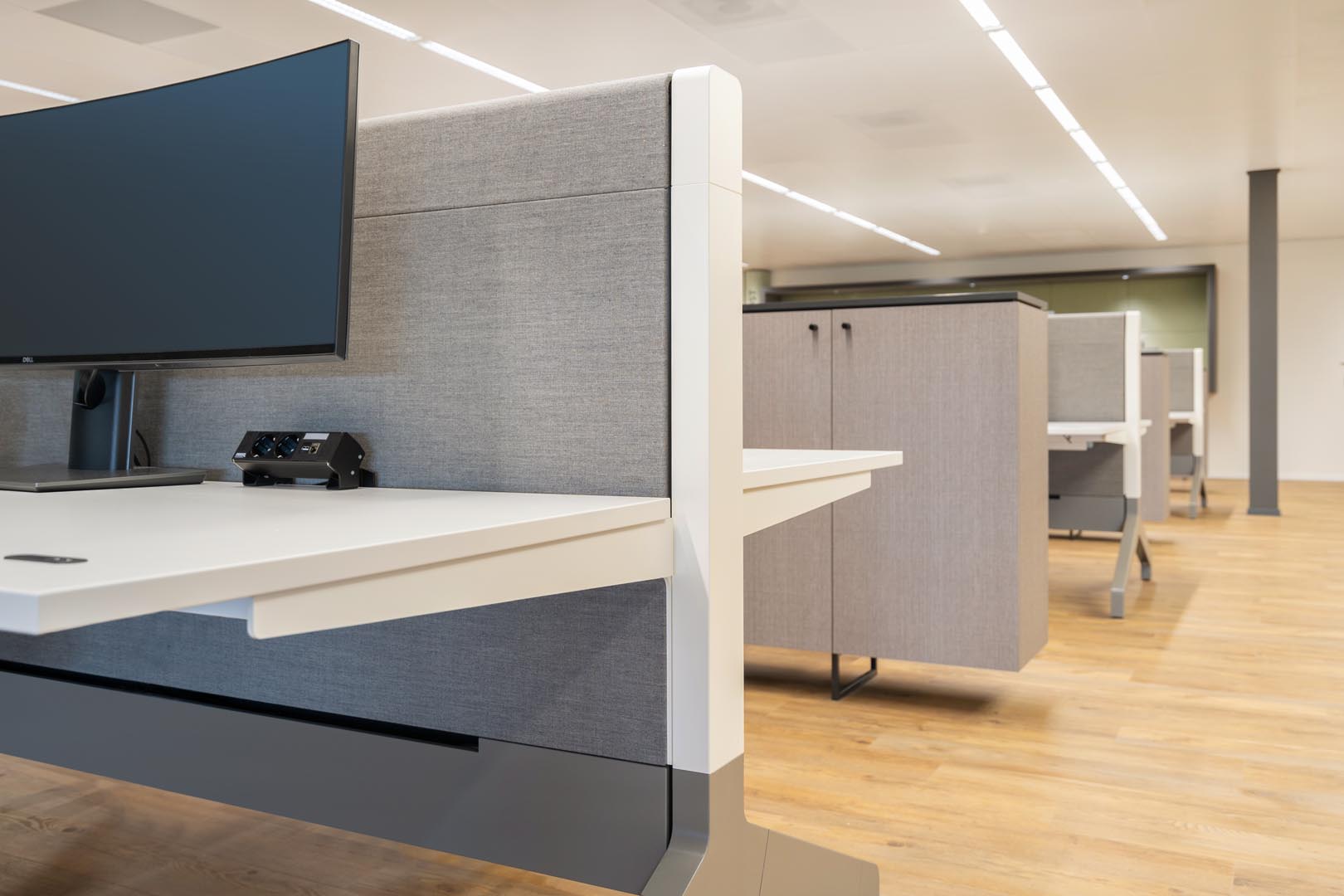
With acoustic partitions or room dividers, you can demarcate workstations visually and acoustically. They limit the direct transmission of speech noise between colleagues and thus increase speech privacy.
The additional advantage? Many of these solutions are modular, portable, and easy to assemble. If your team or the room layout changes, your acoustics simply move with you.
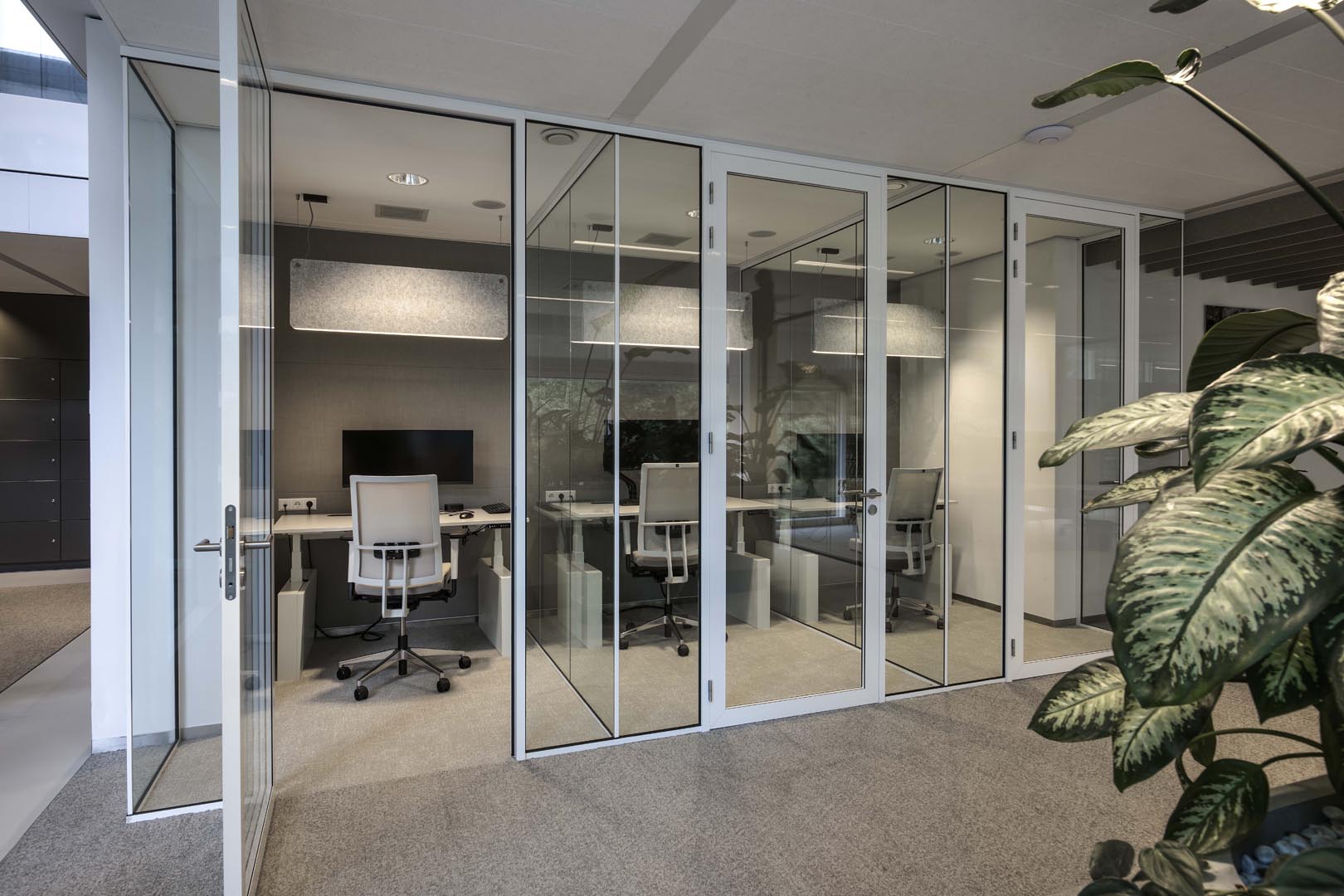
4. Provide a separate phone booth
In many offices, telephone conversations are the primary source of disruption.
By providing a separate phone booth or acoustic pod, you remove those conversations from the open space. This brings peace to the team and ensures better intelligibility during the call itself. Furthermore, you avoid meeting rooms being unnecessarily occupied for short calls.
5. Integrate greenery as acoustic support
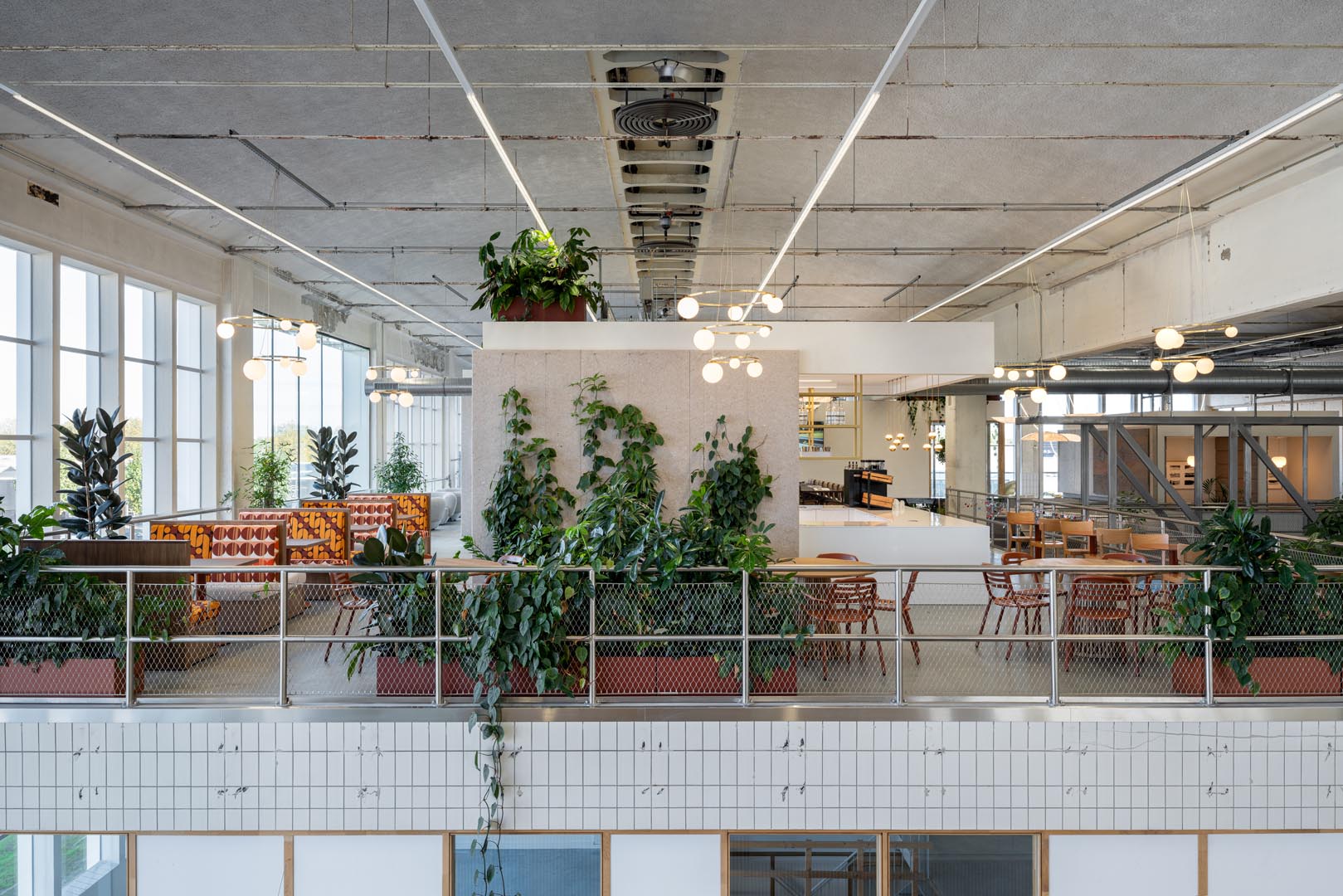
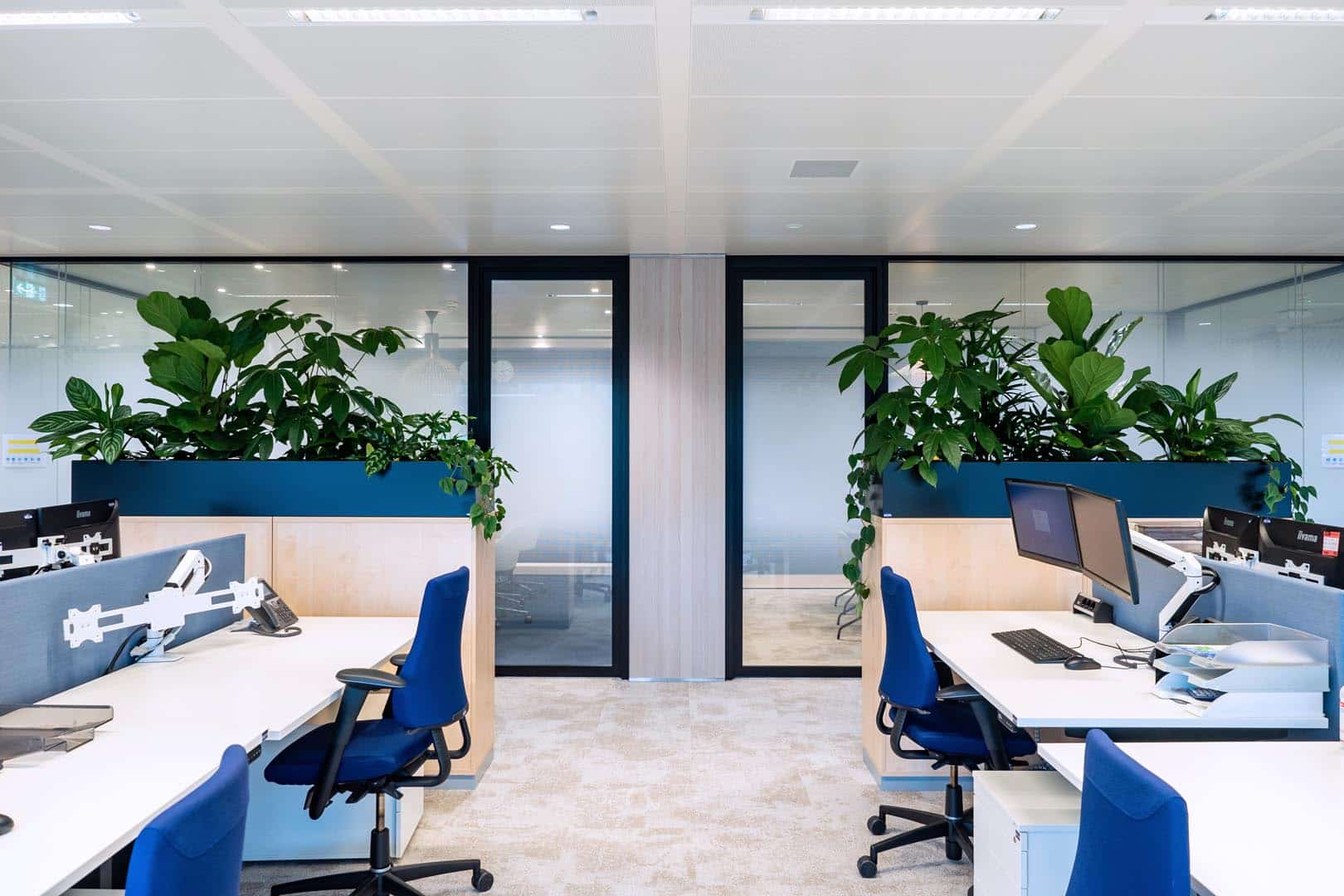
Plants and moss walls are not a primary solution, but they can certainly contribute to a calmer sound environment. Leaves and porous structures absorb and scatter sound, tempering reverberation in rooms with a lot of glass and concrete.
Larger plants and moss walls in particular have a noticeable effect. In combination with targeted wall or ceiling absorption, they enhance the overall picture while simultaneously providing a warmer appearance.
Read also: plants have a proven positive influence.
Your home office also deserves good acoustics
You might think that acoustics only matter in large offices. But it makes a difference at home too.
Fortunately, you can quickly make a difference in a smaller space:
- hang an acoustic wall panel behind or next to your desk
- place a rug under your workstation
- place a bookcase or closed cabinet behind your chair
- add a few larger plants
And you will hear the difference immediately during your next call.
Frequently asked questions about workplace acoustics
What causes poor acoustics in an office?
Poor office acoustics are caused by a combination of hard materials, open spaces, and high levels of speech noise. Sound reflects off walls, floors, and ceilings, increasing reverberation and noise pollution.
Are acoustic panels sufficient to reduce reverberation?
They are often a strong first step. The best results are achieved by combining panels with zoning, shielding, and appropriate materials in flooring and office furniture.
Do you take acoustics into account during the design phase?
Yes. Acoustics are integrated from the design phase through material selection, layout, and ceiling and wall finishes. By considering this early in the process, we avoid later corrections or major adjustments.
Does poor acoustics affect employee productivity and well-being?
Yes. Disruptive noise demands constant subconscious attention. As a result, the brain must reorient itself more frequently, which affects concentration and work pace.
Furthermore, a room with high reverberation increases mental load. This manifests as faster fatigue, more errors, and lower job satisfaction. In the long term, persistent noise nuisance can also intensify stress and irritation.
Read also: improving well-being at work: 5 tips for the ideal work environment.
Time to address your acoustics?
We seamlessly integrate acoustic solutions into the office design of your workplace, from furniture to material selection, so that they are not only functional but also aesthetic and aligned with your brand identity.
Ready for a quieter work environment? Schedule an appointment or visit our Concept Place and experience for yourself the impact of thoughtful acoustics on a space.
Stay informed
- Trends, expertise, news, and tips.
- Make your workplace more productive, where every employee enjoys coming to work.
- Topics: corporate wellbeing, office furniture, and sustainability in the office.