
Which is the better option: open or closed meetings?
Category
Share on:
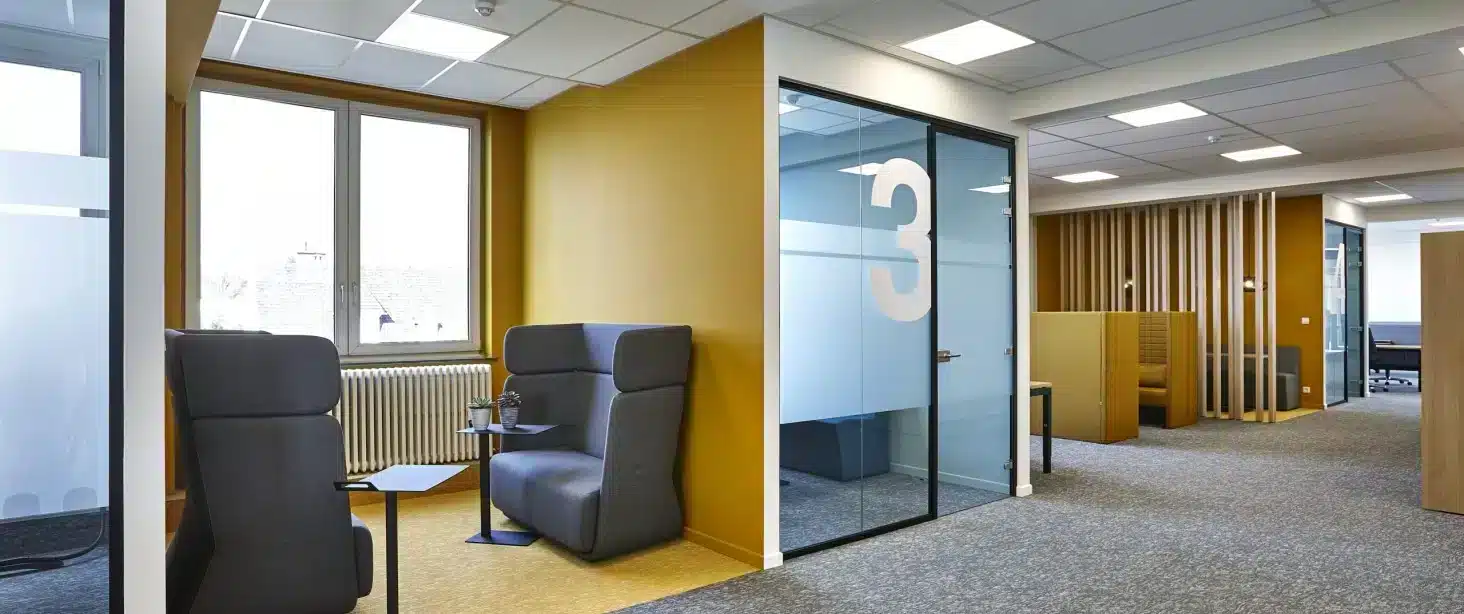
1. Confidential conversations? Choose a closed meeting room
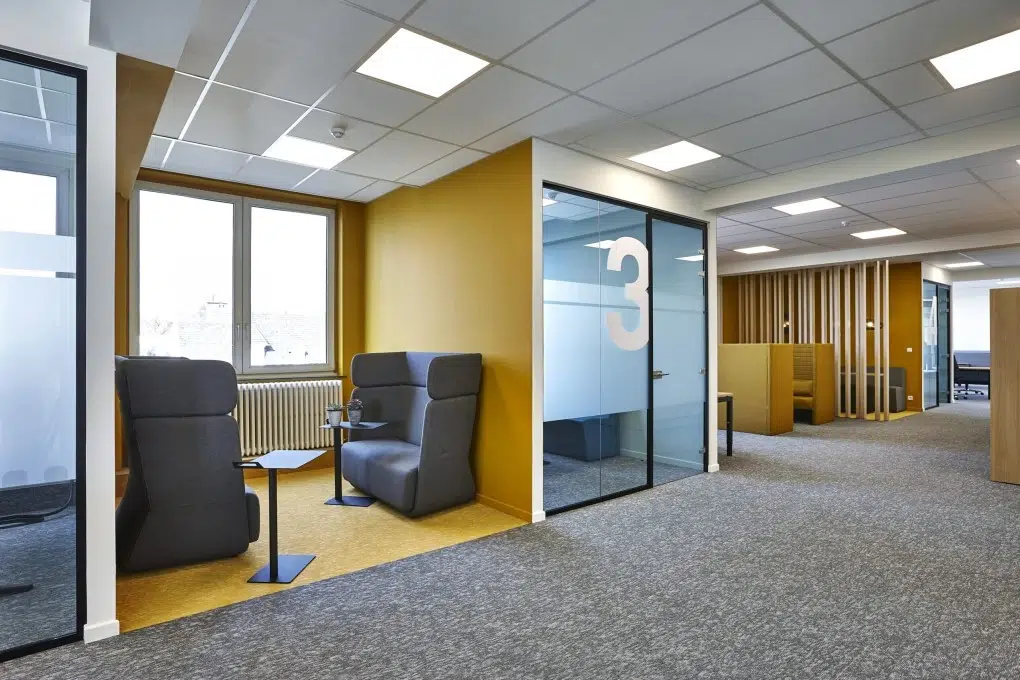
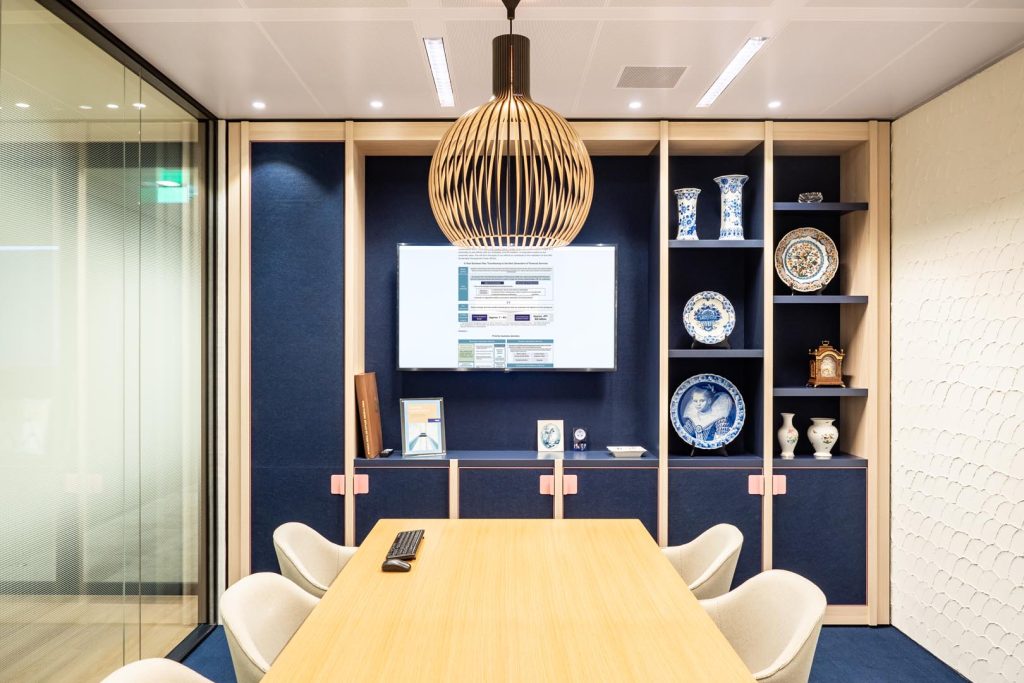
Let us begin with the most classic solution: the closed meeting room. This concept has existed since the early years of office design but has undergone a significant evolution over time. While it used to refer literally to a closed space, today’s closed meeting rooms are largely transparent. This is thanks to the use of glass or other partition walls.
In notary and law firms, fully closed meeting rooms are the rule rather than the exception. Confidentiality and discretion are top priorities, which is reflected, among other things, in the use of sound-insulating materials. With suspended ceilings, it is important to ensure the wall behind them continues upward to avoid acoustic leaks.
2. An open meeting room represents pure dynamism
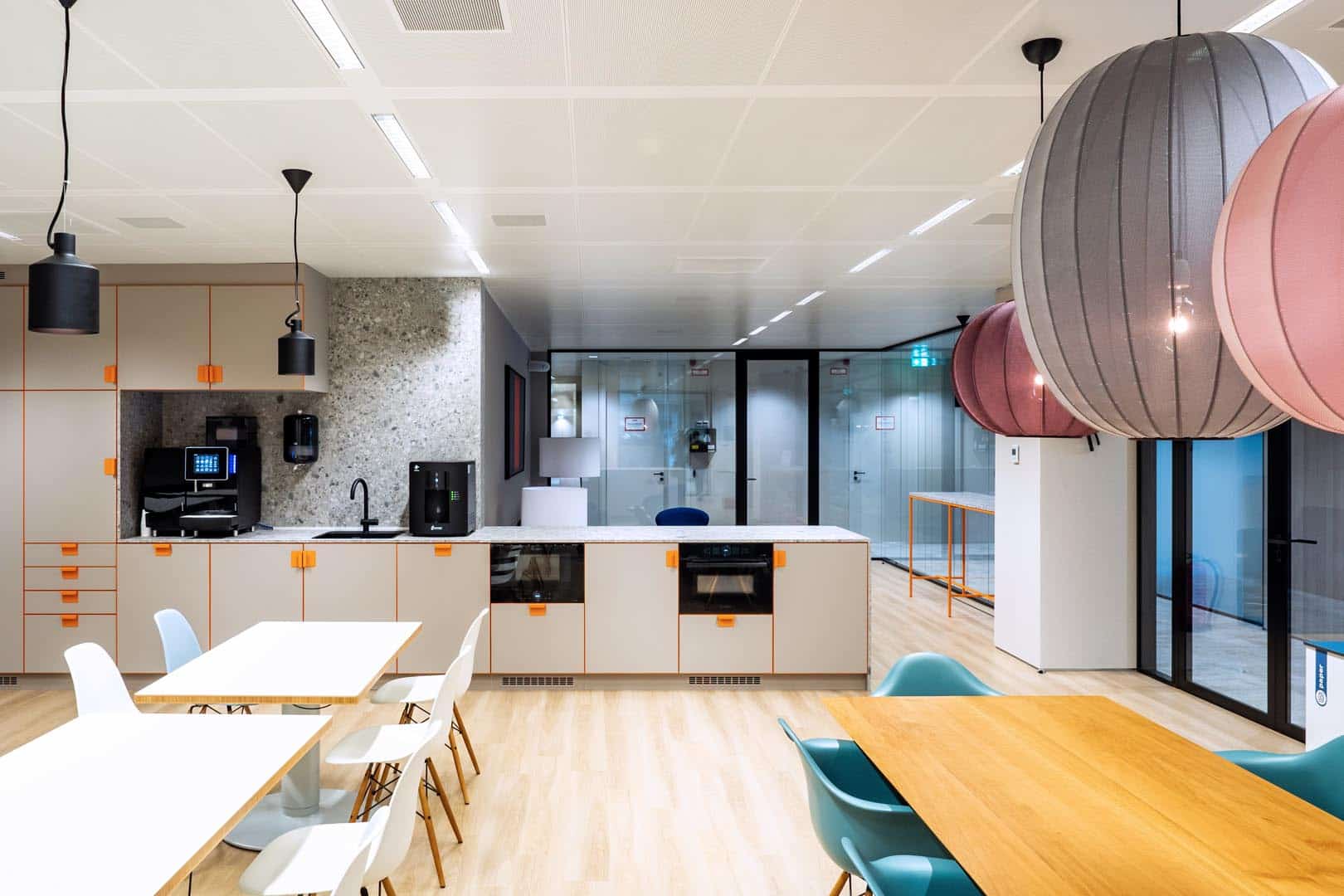
An open meeting room is ideal for companies where collaboration is central. Meetings take place in an open space, which offers many possibilities in terms of design. Consider, for example, a multifunctional space that serves as both a cafeteria and an informal meeting area. Or a workplace where you create a separate zone for quiet meetings. The main advantage? The dynamism of the debate radiates throughout the entire work environment. A must for any creative company.
3. Semi-open meeting rooms: the best of both worlds
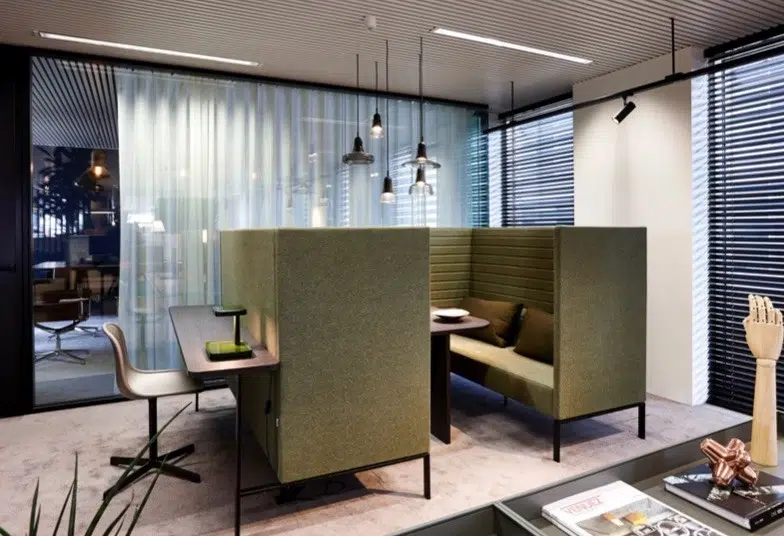
A semi-open meeting room sits halfway between an open and a closed meeting room and combines the best of both worlds: the discretion of a closed meeting room and the transparency of an open meeting room. A semi-open meeting room is located in the same open space as the workstations, but at a sufficient distance so as not to disturb colleagues. Elements are provided to shield the space visually and acoustically without completely closing it off.

Stay informed
- Trends, expertise, news, and tips.
- Make your workplace more productive, where every employee enjoys coming to work.
- Topics: corporate wellbeing, office furniture, and sustainability in the office.