
Smart technology in the workplace
Category
Share on:
Smart technology in the workplace: THE BEST OF BOTH WORLDS
How do you help your team excel in their jobs, maintain the connection between your employees, and ensure efficient management of your office building? Smart technology does the trick! Provided that you deploy those high-tech devices and systems correctly. Nico Staels, director of IT company IKANDA, shares some tips.
The potential downside of hybrid working
Not so long ago, we all commuted to the office every day. As a result of the corona epidemic, flexible home and office days have become permanently established in many companies. Hybrid working is here to stay. The consequence: numerous office buildings remain largely empty. And this is while fixed costs for energy, maintenance, insurance, etc., continue as usual.
For Nico of IT company IKANDA, two things are very clear: “Actually, it doesn’t matter at all where we work, as long as the work gets done. But as an employer, you must ensure that remote workers do not lose their connection with the company. Moreover, empty offices cost your organization money. With optimal use of your office space, you can save significantly. But first, you need to gain insight into how the workplace is used today. This is where smart technology comes into play.”
Saving on unnecessary costs
Tools provide a wealth of valuable data. “With that information, you can easily predict exactly how many square meters you need and how you should divide that space,” says Nico. “For companies that want to scale up or down today in the aftermath of corona, this is a valuable exercise.”
You combine those insights with your workplace DNA: with which layout, rooms, and interior design can your team deliver their very best work? To do this, you examine various pillars, such as your way of working and the different types of work. Only then do you arrive at a workplace that truly suits your organization.
A smart tip!
If you want to know if you have enough meeting rooms, you must measure their actual use. Do not rely solely on what Outlook indicates, because someone who books a room does not always show up. Or vice versa: someone forgets to book a room but uses it anyway. Through smart sensors, you can count the actual occupancy rate.
You can also use tools in other ways to save even more costs or use your company building more efficiently. “With automation, you fully tailor your building to the users,” says Nico. “Think of smart climate control so that only the rooms that are reserved are heated. Or fully automated access systems for visitors and suppliers.”
Smart technology as a connecting factor
Smart technology not only helps save money, it also makes working a lot more efficient: booking a workplace from home, registering visitors at reception, measuring the actual occupancy rate of your meeting rooms, and so on.
Furthermore, tools can bridge the gap between the physical and digital workplace, Nico believes.
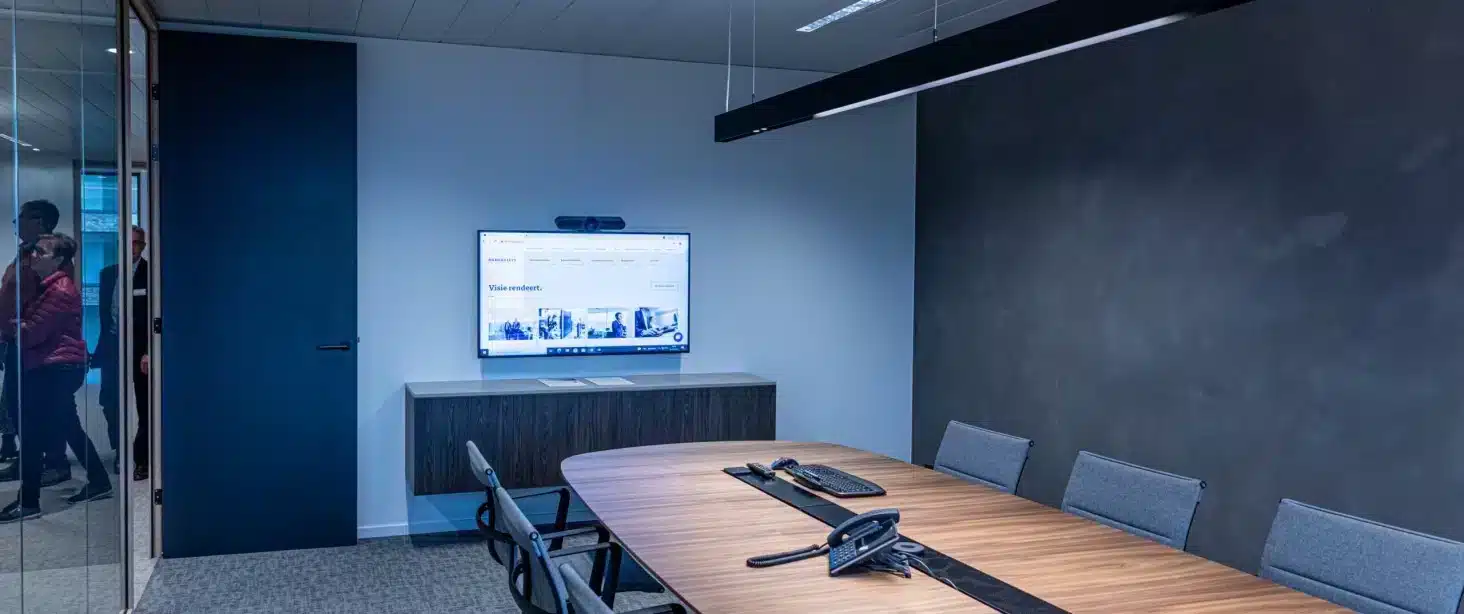
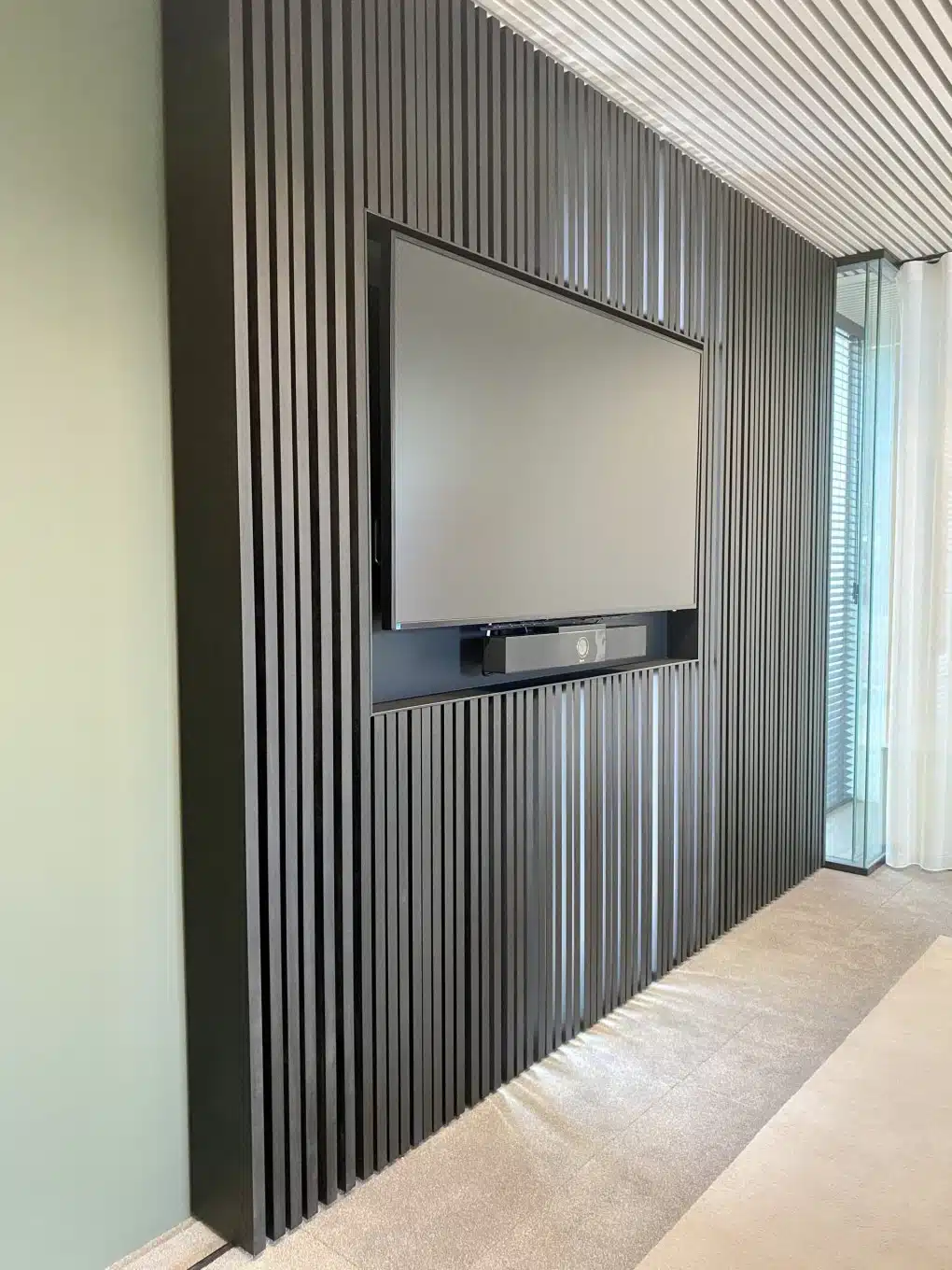
“With video conferencing, remote working becomes a breeze and you also maintain the connection between colleagues. This gives your employees the choice: which tasks do they perform more efficiently at home and when do they come to the office. On those office days, they easily book a workplace or meeting room online. This way, they are always guaranteed a spot.”
Using smart technology: everyone wins
Technology and innovation can contribute to an efficient, future-oriented way of working, provided they meet the needs of all stakeholders.
“For employees, the ease of use of the tools is paramount. Nothing is as frustrating as a webcam that stutters during a Teams call or a meeting room where the projector doesn’t work.”
“Employers want to know how and when their teams work and whether the systems are not being misused: for example, are the booked workplaces and meeting rooms actually being used?”
“The facility manager, in turn, wants to use the building as efficiently as possible in terms of lighting, heating, or access rights. And the IT manager expects everything to run smoothly and securely and for the tools to be integrated into their own network as much as possible. All these different interests must be included in the strategic process.”
A story for the future
And the price tag? Nico wants to clear up a misunderstanding immediately. Choosing smart technology is not always an expensive project from A to Z. “Companies also often come to us with a specific request: they want an online reservation system for meeting rooms, for example. We can provide such a solution perfectly.”
“But it is important to always take the client into the bigger picture. How does the company work today and how do they want to evolve? Will they continue to work hybridly and if so, what exactly do they need? By asking those questions, we prevent clients from choosing a partial solution that they might get stuck with later when they want to expand.”
3 tips for success
As with many new developments, there are also pitfalls to consider when implementing smart technology. “On the one hand, it is important that everyone is on board with the story,” Nico emphasizes. “Not just the IT manager, but the entire management team must be on the same wavelength.”
“On the other hand, employees must know exactly what is expected of them. You cannot introduce a new system without informing your team about its use. Training and checklists help them get started smoothly with the new tools. Finally: in an ideal world, management applies the new method immediately to set a good example. After all, seeing work in action inspires work.”

Stay informed
- Trends, expertise, news, and tips.
- Make your workplace more productive, where every employee enjoys coming to work.
- Topics: corporate wellbeing, office furniture, and sustainability in the office.